

What Is Graves’ Disease?
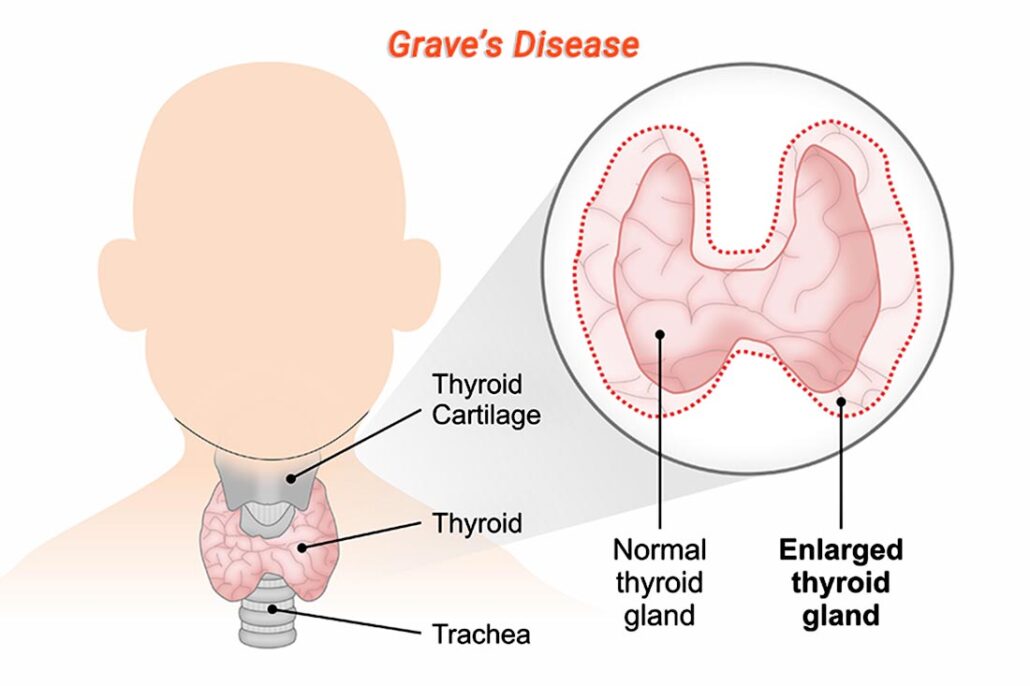
Graves’ disease is an autoimmune condition that causes hyperthyroidism, which means your thyroid gland becomes overactive (“hyper”) and starts producing too much thyroid hormone.
Why does this happen?
In all autoimmune diseases, the immune system attacks a specific target, but the consequence depends on what the immune attack does to that target.
In type 1 diabetes, the immune system destroys the insulin-producing beta cells of the pancreas.
In Graves’ disease, the immune system behaves differently. Instead of destroying thyroid cells, it produces antibodies called thyroid-stimulating immunoglobulins (TSI) that bind to and activate the thyroid-stimulating hormone (TSH) receptor on thyroid cells.
These antibodies “press the accelerator pedal” continuously, tricking the thyroid gland into thinking it’s receiving a constant signal from the pituitary gland. As a result, the thyroid gland produces too much thyroid hormone, leading to hyperthyroidism.
The Connection between Type 1 Diabetes and Thyroid Disease
If anyone is keeping track of things that aren’t fair about diabetes, you can add “getting another autoimmune condition” to the list.
Why can you have multiple autoimmune diseases?
When your immune system mistakenly attacks itself, as is the case with type 1 diabetes, it can make you more susceptible to other immune attacks.
Thyroid disease is one of the most common conditions people with T1D get because the two conditions share overlapping genetic risk factors. Some studies estimate that up to 30% of people with type 1 diabetes will develop some form of thyroid disease during their lifetime.
Hashimoto’s disease, which causes hypothyroidism (an underactive thyroid), is actually more common in people with type 1 diabetes than Graves’ disease. I never miss an opportunity to be an outlier!
When your thyroid isn’t functioning properly from either hypothyroidism or hyperthyroidism, it can affect blood sugar levels, insulin needs, and overall diabetes management.
Symptoms of Graves’ Disease
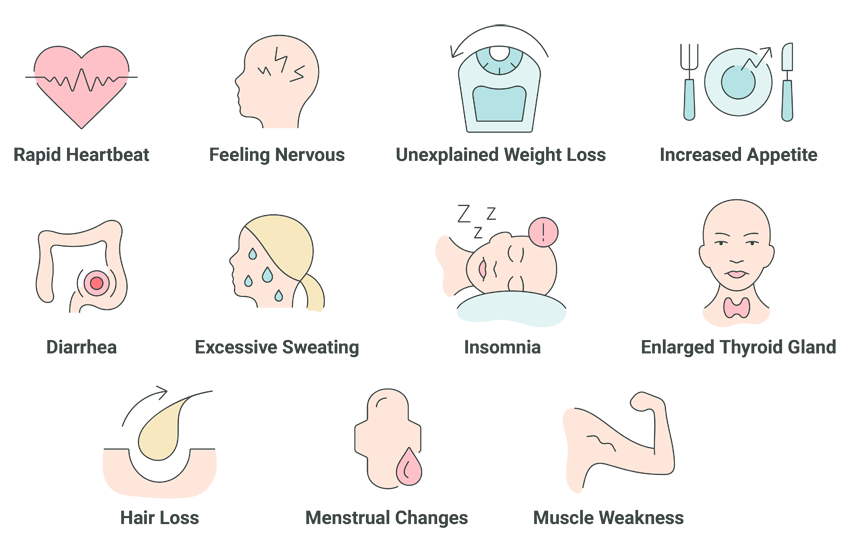
Your thyroid helps regulate a lot of important things like metabolism, energy use, body temperature, heart rate, and digestion. When your thyroid hormone levels are too high or too low, it can lead to a wide range of symptoms.
My diagnosis came as a total surprise, but then I started thinking about how I’d been feeling in the months leading up to it.
I had muscle weakness in my legs (which I especially noticed when I was cycling), and I had lost weight without trying. I usually weigh between 174 and 176 lbs, and I had gotten down to 168. I had to move around in the shower to get wet!
Symptoms of Graves’ disease often develop slowly and can be very variable, so it can be easy to attribute them to something else (or miss the symptoms entirely).
Common symptoms include:
- Proximal muscle weakness
- Unexplained weight loss
- Sensitivity to heat
- Sudden increase in insulin requirements
- Heart palpitations
- Anxiety or nervousness
- Increased appetite
- Trouble sleeping
- Fatigue
- Frequent bowel movements
- Lighter menstrual periods (this was the worst for me!)
- Bulging eyes
Some people also develop swelling in the neck from an enlarged thyroid gland (called a goiter) or eye-related symptoms from thyroid eye disease (TED), also known as Graves’ orbitopathy or Graves’ ophthalmopathy.
Thyroid eye disease occurs when the immune system mistakenly attacks the tissues behind the eyes, causing inflammation and swelling. Symptoms include bulging eyes, eye pressure or pain, dry or gritty eyes, redness, light sensitivity, and double vision.
About 1 in 3 people with Graves’ disease develop thyroid eye disease.
Graves’ Disease and Blood Sugar: What You Need to Know If You Have Diabetes
I didn’t notice any changes to my blood sugar before I was diagnosed, but Graves’ disease can affect diabetes management for some people. Thyroid disease and blood sugar fluctuations are common.
Hyperthyroidism can speed up your metabolism, so insulin and other medications may be metabolized faster. Your blood sugar levels may be higher than usual because the insulin isn’t staying in your body as long as it used to, so your insulin needs may increase.
In addition, some symptoms of hyperthyroidism can mimic those of hypoglycemia, like feeling anxiety, irritability, heart palpitations, and fatigue.
The good news is that thyroid treatments are generally effective and well-tolerated, and most people are able to successfully manage both T1D and Graves’ disease.
How Is Graves’ Disease Diagnosed in People with Diabetes?
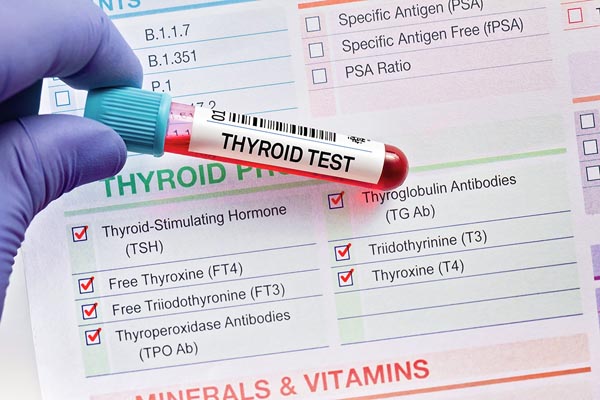
Graves’ disease is usually diagnosed through blood tests that measure thyroid function (TSH, Free T4, and T3) and/or thyroid antibody tests (TRAb or TSI).
Your primary care provider or endocrinologist can run these tests for you. If your levels come back elevated, your doctor may order an ultrasound, thyroid scan, or radioactive iodine uptake test.
When my thyroid test results came back, my TSH was totally suppressed. It was so low it didn’t even register a numeric level.
My doctor ordered a full thyroid function panel which included TSI (Thyroid-Stimulating Immunoglobulin), which tells you if you have an autoimmune thyroid disorder like Graves’. There are other causes for hyperthyroidism that are not autoimmune related.
Unfortunately not all providers do thyroid screening on a regular basis, so many cases of thyroid disease go undiagnosed. If you have type 1 diabetes, make sure you get your thyroid levels checked every year!
Treatments for Graves’ Disease
If there’s a glass-half-full side to Graves’ disease, it’s that it’s a very treatable condition when it’s caught early, and most people do very well once their thyroid levels are back under control.
There are three primary treatment options:
1. Anti-Thyroid Medications
Medications like methimazole are often used to help control symptoms. Some people stay on these medications long-term, while others are able to go off their medication at some point or transition to other treatments. Some people do develop hypothyroidism after a while.
2. Radioactive Iodine Therapy
The word “radioactive” sounds scary, but this treatment has been used safely for decades. Because thyroid cells naturally absorb iodine, radioactive iodine can selectively damage overactive thyroid tissue and reduce hormone production.
Over time, many people who receive this treatment develop hypothyroidism and need lifelong thyroid hormone replacement.
3. Surgery
In some cases, surgical removal of the thyroid gland is needed. This can happen if the thyroid is very enlarged, medications are ineffective, eye disease is severe, thyroid nodules are present, or someone can’t tolerate other treatments. After the thyroid is removed, lifelong thyroid hormone replacement is necessary.
I’ve been on oral medication (5 mg of methimazole) for a few months now, and my TSH is back at a detectable level. I’ve returned to my normal weight, and I feel much stronger in my legs.

Our goal is to protect your personal health information. Please keep your questions general and do not post personal medical information here. If you have a specific question, please email events@tcoyd.org.
I would have liked to hear more about Hypothyroidism,symptoms and treatments since this is far more common with Type 1 than Graves.
We’ll do that soon!
Great article as I too just celebrated my 50 year T1D anniversary.
Congratulations…you’re officially a legend!