
Diabetes and Liver Function: What Does Your Liver Actually Do?
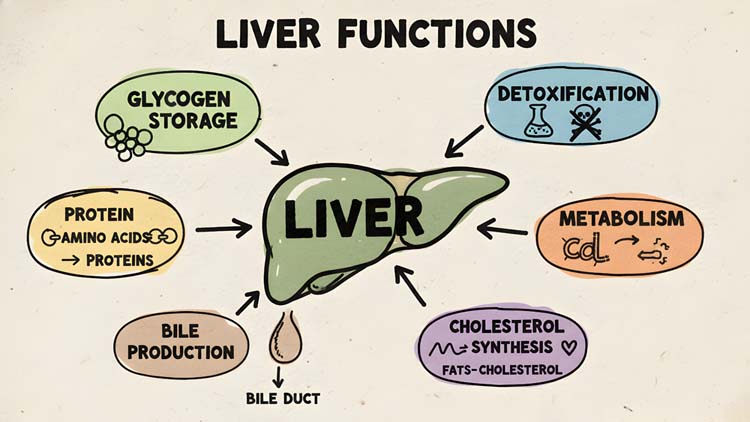
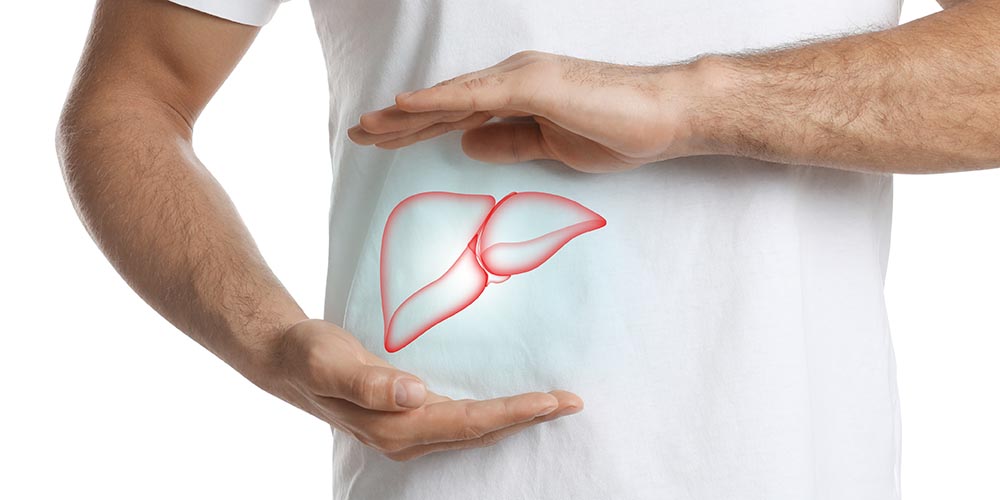
Your liver is one of the hardest-working organs in your body, handling over 500 tasks every day to help keep you healthy. One of its biggest responsibilities is to filter toxins and waste from your blood. When something enters your body that doesn’t belong there (like one too many spicy margaritas), you can thank your liver for helping to filter it out.
Your liver also plays an important role in blood sugar management. It stores glucose in the form of glycogen and releases it when your body needs energy. The relationship between glucose and the liver is important for overall metabolic health, and your liver is constantly working behind the scenes to help keep glucose levels stable.
Why Are People with Diabetes at a Higher Risk for Liver Disease?
Type 2 diabetes and liver disease are more common than you might think…up to 70% of people with type 2 diabetes also have some degree of liver disease. Since over 35 million Americans have T2D, that’s a lot of millions of people who also have liver disease.
When your body becomes resistant to insulin, your liver starts making and storing more fat than it should. Over time, the excess fat buildup in the liver can lead to inflammation. If inflammation and fat buildup continue to progress, scar tissue can form on the liver.
Liver complications from diabetes typically develop very slowly over the course of many years, and there often aren’t symptoms in the early stages.
How Common Is Liver Disease in Type 1 Diabetes?
Liver disease is less common in type 1 diabetes, but some studies suggest up to 22% of people with type 1 may have early-stage liver disease.
Risk may be higher if there’s:
- Insulin resistance
- Higher body weight
- High cholesterol or triglycerides
- High blood pressure
- A family history of metabolic disease
Liver disease in T1D may actually be under-recognized because fatty liver and diabetes are usually looked at as a type 2 diabetes issue. However, as more people in general struggle with their weight, liver disease is occurring more often in people with all types of diabetes.
What Are the Stages of Liver Disease?
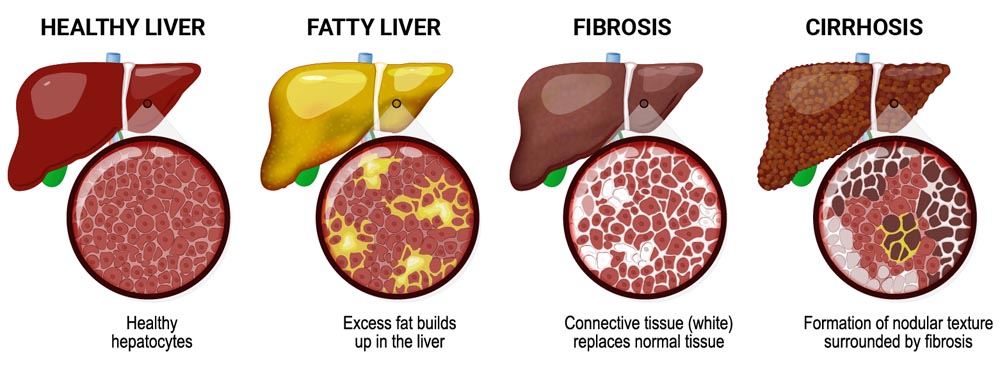
Liver disease happens on a continuum, but there are four primary stages:
- Stage 1: MASLD (metabolic dysfunction-associated steatotic liver disease). Fat builds up in the liver and causes inflammation. MASLD is closely linked to metabolic conditions such as obesity, insulin resistance, and type 2 diabetes.
- Stage 2: MASH (metabolic dysfunction-associated steatohepatitis). Fat buildup continues, leading to significant inflammation and liver scarring called fibrosis. People with type 2 diabetes are at a higher risk of developing MASH.
- Stage 3: Fibrosis. Advanced liver disease with excessive scar tissue buildup. Most people are diagnosed in this stage, when they may have symptoms and their labs come back with abnormal numbers.
- Stage 4: Cirrhosis. Permanent liver scarring that can lead to liver failure and the need for a liver transplant.
Liver disease is a serious condition, but because it develops slowly, there is often a window of opportunity to catch it early and prevent permanent damage.
Signs and Symptoms: Why Liver Disease Is Easy to Miss In Early Stages
Liver disease usually develops without noticeable signs in the early stages. People can go for years (decades, even) without symptoms. In fact, most people learn they’re in an advanced stage after routine bloodwork reveals a problem.
Symptoms of MASLD may include:
- Fatigue
- Weakness
- Discomfort in your upper right belly
Symptoms of MASH may include:
- Itchy skin
- Swelling in the belly, legs, or feet
- Unexplained weight loss
- Muscle weakness
- Trouble breathing
- Easy bruising and bleeding
- Enlarged spleen
- Jaundice (yellowing of the skin or eyes) as the condition worsens
How Is Liver Disease Diagnosed in People with Diabetes?
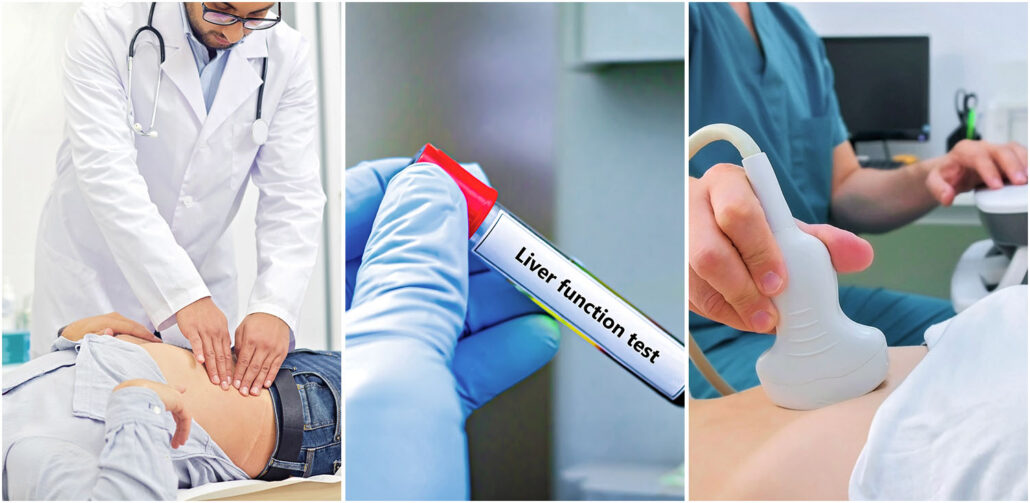
Diagnosing liver disease usually involves a combination of a physical exam, blood tests, and imaging tests. Because many people with liver disease can still have “normal” liver enzyme levels, a screening tool called the FIB-4 Index can help estimate whether liver scarring is present.
The FIB-4 Index is essentially a calculation of four numbers:
- Lab results from the AST liver enzyme test
- Lab results from the ALT liver enzyme test
- A platelet count
- Your age
If the results suggest possible fibrosis, your healthcare provider will likely recommend imaging tests (ultrasound, CT scan, or MRI) to take a closer look at your liver.
Everyone with diabetes should have their FIB-4 value calculated as soon as they’re diagnosed with diabetes (especially type 2 diabetes and/or if obesity is present) and then annually after that. It’s a simple test that can track liver health and identify disease progression over time.
How to Treat Liver Disease and MASH
If liver disease is caught early, lifestyle changes can make a big difference. Regular exercise, weight loss, healthy eating, and avoiding alcohol can help reduce inflammation, lower liver fat, and even slow or reverse disease progression.
If liver disease has progressed to MASH, two medications are now FDA-approved to treat it.
- Rezdiffra is a once-daily oral medication that works directly in the liver. It helps the liver process and remove excess fat, which can reduce inflammation and improve liver scarring (fibrosis). Because it targets the liver specifically, it does not cause weight loss.
- Wegovy is a GLP-1 medication that helps treat MASH in a different way. By promoting weight loss and improving metabolic health, it can reduce liver fat, inflammation, and scarring. Its liver benefits are largely driven by its effects on body weight and metabolism.
Other GLP-1 medications have shown promise, but are not FDA-approved for MASH. Ozempic has the same active ingredient as Wegovy and may provide similar liver benefits, and Mounjaro has also demonstrated encouraging results in clinical trials.
In a nutshell, Rezdiffra is a liver-targeted treatment designed specifically for MASH, while Wegovy improves liver health primarily by helping people lose weight and improve their metabolic health.
7 Tips to Prevent Liver Disease
The same habits that help protect your heart, kidneys, and blood sugar can also help protect your liver:
- Maintain a Healthy Weight: Even modest weight loss can help reduce fat buildup and inflammation in the liver.
- Eat a Balanced Diet: Limiting ultra-processed foods, sugary drinks, and excess saturated fat while focusing on fiber, lean protein, fruits, veggies, and healthy fats can support liver health.
- Stay Active: Regular movement helps improve insulin sensitivity and can reduce fat stored in the liver.
- Manage Blood Sugar, Cholesterol, and Blood Pressure: Keeping them in your target range can help lower your risk of developing fatty liver disease.
- Avoid Alcohol: Sorry…it’s time to befriend the mocktail, and your liver will appreciate it!
- Get Screened Regularly: Early-stage liver disease is commonly asymptomatic, so regular testing is crucial!



Our goal is to protect your personal health information. Please keep your questions general and do not post personal medical information here. If you have a specific question, please email events@tcoyd.org.
Thank you so much for posting this. Liver disease is so often overlooked.
Good information GOD bless for this wonderful information.Knowledge is powerful and indeed this is powerful. Thanks for sharing.
Thanks for your kind words, and yes we wholeheartedly agree that knowledge is power! 🙂
What are the chances of reversing the damage once you reach cirrhosis?
Unfortunately, it is an end-stage problem. However, seeing a very good hepatologist might be able to stabilize your liver.
I have fatty liver disease
Very sorry to hear that – hopefully you are being treated for it. If you have any questions please do let us know.
How can I feel it?
There aren’t often symptoms in the early stages, which is why regular screening is so important!