

What Exactly Is CRHM Syndrome?
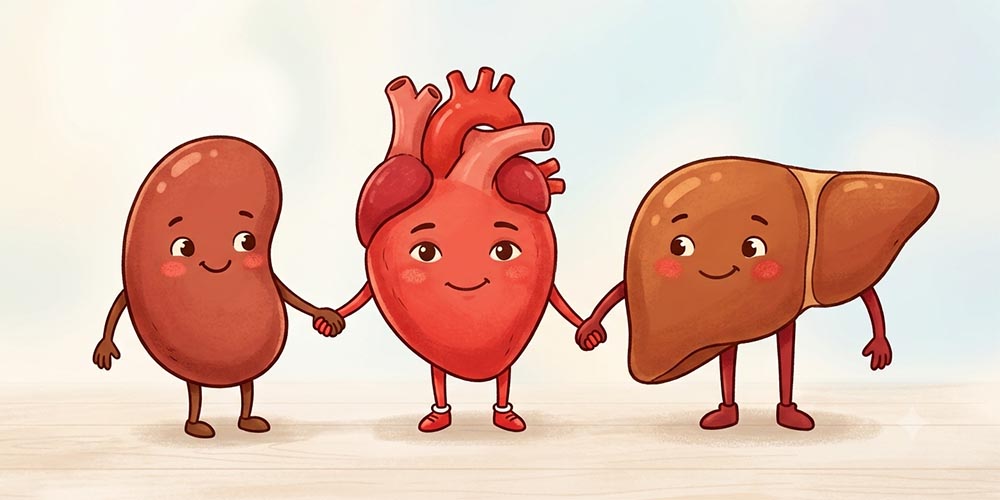
CRHM syndrome is a condition that affects three major organs in your body – your heart (cardio), your kidneys (renal), and your liver (hepatic). The underlying cause of CRHM is metabolic syndrome (we’ll get into that next).
These systems are constantly communicating and relying on each other, so when one isn’t working as well as it should, the others are often affected.
For example:
- Heart problems can reduce blood flow to the kidneys.
- Kidney disease can increase the workload on the heart.
- Liver disease is closely linked with insulin resistance and inflammation, which can also increase the risk of heart and kidney disease.
Insulin resistance and inflammation are the underlying pathophysiologic defects of the heart, kidneys, and liver.
What Causes CRHM?
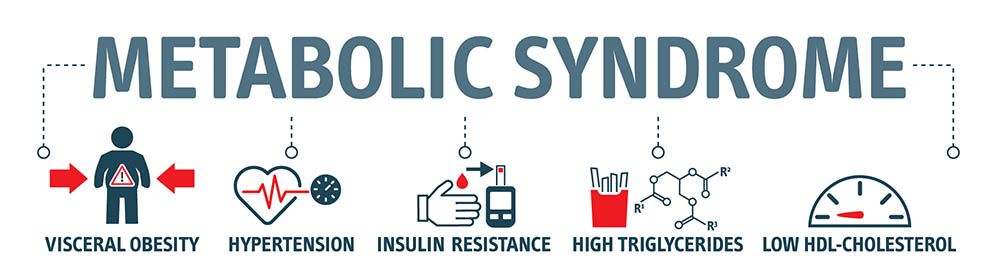
The primary cause of CRHM is metabolic syndrome, which is a cluster of conditions that sets the stage for heart disease, kidney disease, liver disease, and type 2 diabetes.
Metabolic syndrome occurs when you have at least three of the following conditions:
- Obesity
- Insulin resistance
- Chronic inflammation
- Elevated blood sugar
- High blood pressure
- Abnormal cholesterol (high triglycerides and low HDL “good” cholesterol)
- Endothelial dysfunction (when the lining of your blood vessels becomes damaged, making it harder for blood to flow)
Ultimately, all of these issues put extra stress on your blood vessels and interfere with how your heart, kidneys, and liver function.
Why Are People with Diabetes at Risk for CRHM Syndrome?
Insulin resistance is the main driver of type 2 diabetes, and most people with type 2 diabetes also have:
- Obesity
- High blood pressure
- Chronic inflammation
- Abnormal cholesterol
All of these factors contribute to metabolic syndrome, which is the foundation of CRHM.
Although CRHM syndrome is more common in people with type 2 diabetes, people with type 1 diabetes can develop it too, especially if they have metabolic risk factors.
CRHM Symptoms, Screening, and Diagnosis
One of the challenging aspects of CRHM syndrome is that abnormalities in your heart, kidneys, and liver can develop quietly over time, often without any symptoms in the early stages.
Also, there isn’t one specific test to check for CRHM. This means we have to look at each organ individually, so your doctor should be checking your cholesterol, blood pressure, kidney function, and liver function at least once a year to help catch potential problems early.
There are several tests your healthcare provider can run, but here are some of the important ones:
Heart Health Tests:
Cardiac markers like NT-proBNP can help identify signs of stress on the heart.
Kidney Function Tests:
Tests like eGFR (estimated glomerular filtration rate) and urine albumin-creatinine ratio (uACR) can help evaluate how well your kidneys are working and check for early signs of kidney damage.
Liver Health Tests:
The FIB-4 Index is a calculation that uses four numbers (results from your AST and ALT liver enzyme tests, your platelet count, and your age) to estimate your risk of liver scarring (fibrosis).
What If Your Test Results Aren’t Normal?
If your test results come back with elevated values, the first step is to have a conversation with your healthcare provider about what your numbers mean and what you can do next.
Depending on your situation and which area needs attention, you may be referred to a cardiologist (heart specialist), nephrologist (kidney specialist), or liver specialist for further evaluation and treatment options.
In the meantime, you can continue working on the things we know help protect your metabolic health:
- Managing blood pressure
- Keeping cholesterol levels in a healthy range
- Staying active
- Avoiding tobacco
- Working toward a healthy body weight (we know it’s easier said than done)
How to Treat CRHM Syndrome
Even though CRHM syndrome affects multiple organs that need to be monitored individually, you don’t necessarily need a separate medication to treat each one.
Many of today’s medications like GLP-1s, SGLT inhibitors, and nsMRAs were originally developed for specific conditions related to type 2 diabetes, but research has shown they can provide benefits in multiple areas, including the heart, kidneys, and liver.
GLP-1 Receptor Agonists:
GLP-1s help lower blood sugar and support weight loss, but many have also been shown to improve insulin resistance, reduce the risk of heart attack and stroke, protect kidney function, reduce liver fat, and improve MASLD/MASH. Examples of GLP-1s are Ozempic & Wegovy (semaglutide), Mounjaro & Zepbound (tirzepatide, a GLP-1/GIP), Trulicity, and Victoza.
SGLT Inhibitors
SGLT inhibitors were developed to lower blood sugar in people with type 2 diabetes, but they’re now a cornerstone treatment for chronic kidney disease and heart failure. They may also reduce liver fat, although none are currently FDA-approved for liver disease. Examples of SGLTs are Jardiance, Farxiga, Invokana, and Inpefa.
Non-Steroidal MRAs
Non-steroidal mineralocorticoid receptor antagonists (nsMRAs) are one of the newest medication classes used to protect the kidneys and heart. The only FDA-cleared medication in this class is Kerendia (finerenone), which is indicated for people with chronic kidney disease associated with type 2 diabetes, and for people with heart failure with mildly reduced or preserved ejection fraction.
Studies have shown that finerenone can also lower the risk of certain cardiovascular events, as well as reduce inflammation and fibrosis in the liver.
Other Ways to Protect Your Heart, Kidneys, Liver, & Metabolic Health

While these newer medications can cover a lot of ground, the tried-and-true foundations of diabetes care are still important:
- Glucose Management: Keeping blood sugars in your target range as much as possible helps protect blood vessels and reduces the risk of complications.
- Blood Pressure Management: Healthy blood pressure is one of the most important ways to protect your heart and kidneys.
- RAS Inhibitors (including ACE Inhibitors and ARBs): These medications have been used for decades to help protect the kidneys and cardiovascular system.
- Weight Management: Do the best you can to maintain a healthy weight (we know it’s hard!).
- Healthy Lifestyle Habits: Regular physical activity, balanced nutrition, quality sleep, and avoiding smoking can all help support your metabolic health.

Our goal is to protect your personal health information. Please keep your questions general and do not post personal medical information here. If you have a specific question, please email events@tcoyd.org.
Thank you for the information!
I’ve been diagnosed with Mixed Connective Tissue Disease, specifically Lupus, Scleroderma and Arthritis. also have Diabetes 2, High Blood Pressure, Hashimoto’s and Liver issues. Can I have CHRM?
I would like to look into this. I have all these going on.
Good thing to speak with your doctor about so he or she can determine the best course of treatment.
Kidney, liver and diabetes
How is the FIB-4 calculated? Are the numbers of the ALT, AST, platlets and age simply added together? And what is a normal score?
The Liver Foundation website explains the calculation breakdown and results:
https://liver.org.au/health-professionals/fib-4-calculator/
I would love to learn so much more about this condition and how to go about seeing if I might have this with certain tests or exams I was up to 300 lb years and years ago and I was insulin resistant I had gastric bypass and hardly laugh much weight it’s been hinted to me by my current gastroenterologist and gastroenterologist surgeon that the gastric bypass surgeon back in 2015 May some mistakes and I did have many gastrointestinal issues until this beginning of this past year in 2025 went into the hospital not feeling well and it turned out that I had severe gastric issues and I was septic and close to death went into surgery right away they took my very infected gallbladder out and from then on it was extreme weight loss in a short period of time and in ulcer that was bleeding hiatal hernia and a lot of other things that I just don’t know how to explain because I did not understand the the doctorish language but a laparoscopic approximately 1 hour surgery turned into opening me up completely and 6 hours later the surgeon fixed many problems that he found and like I said I not sure exactly what they all were because of my memory issues but I have them somewhere in my medical records I also recently have a stroke and then I was going through a MRI of the abdomen result and it said I had a liver lesion which was never mentioned to me and I don’t know where I stand with the kidney issue I have many specialists and like I said my stroke has caused cognitive decline confusion like the focus in memory issues and I’m overwhelmed I had heart open heart surgery in 2019 for a new aortic valve and I’m having a lot of symptoms regarding my heart palpitation dizziness falls and unstable gate etc etc I’d like to know if I possibly could have this problem and with love to get guided on how to go to the next step I would be so appreciative
Based on the history you shared, you may have CRHM. Many people with type 2 diabetes do have it with varying degrees. The best thing to do is to start with your primary care doctor, but also discuss this issue with your other specialists.