


Types of Hearing Loss & Their Causes
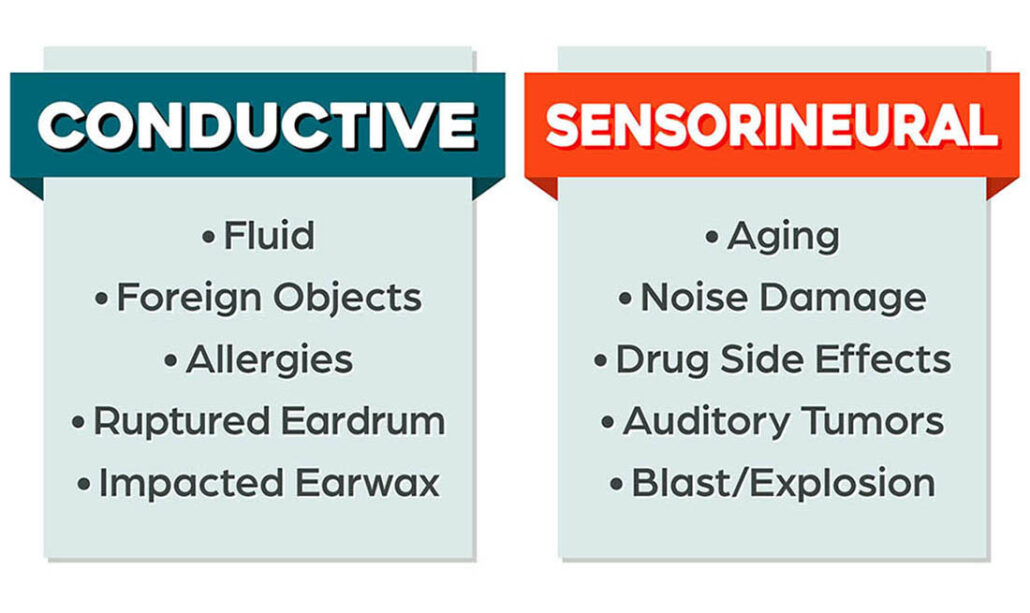
There are two primary types of hearing loss:
Conductive Hearing Loss
Conductive hearing loss happens when sound can’t properly make its way to the inner ear. Common causes include ear infections or physical blockages, like an ear canal clogged with earwax.
Sensorineural Hearing Loss
Sensorineural hearing loss occurs when there’s some type of damage or deterioration of the nerves and blood vessels in the inner ear. This is the most common type of hearing loss for people with and without diabetes.
Why Does Diabetes Affect Hearing?
You probably already know that diabetes can affect your eyes, nerves, kidneys, and heart, since high blood sugar over time can affect how well your blood moves throughout your body. The same process can also affect your hearing.
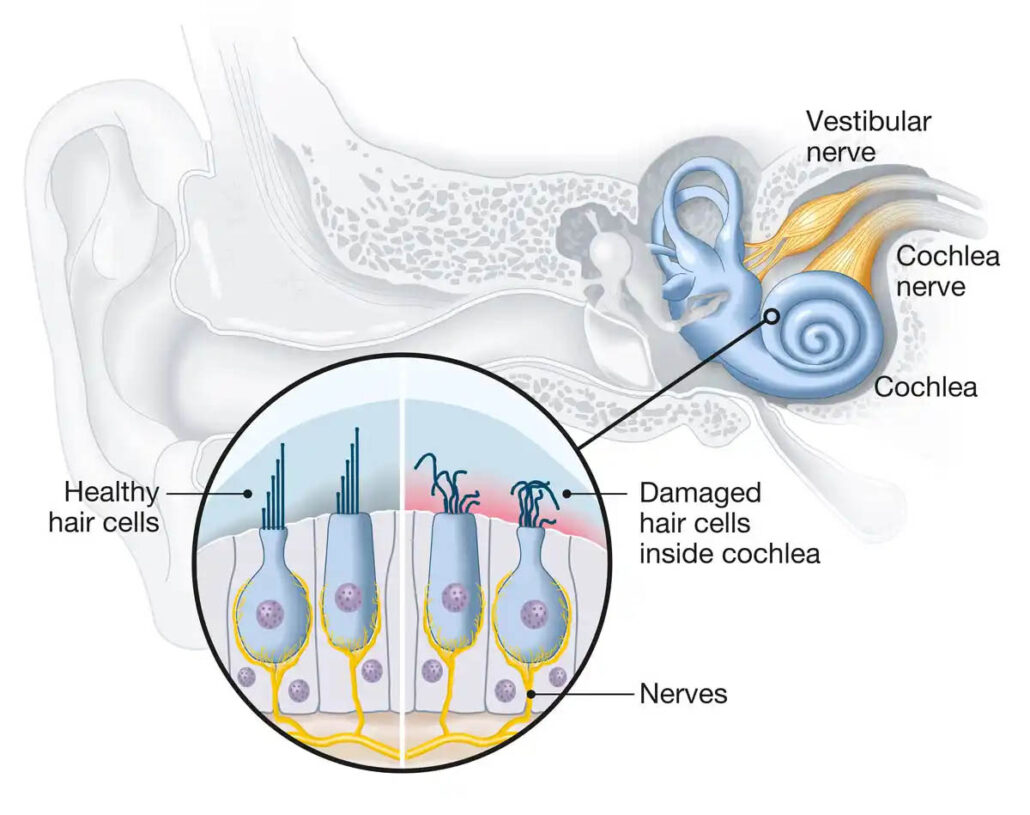
Your inner ear (cochlea) has some of the smallest, most delicate blood vessels in your body. They depend on a healthy blood supply (and steady supply of glucose and oxygen) to keep the tiny hearing cells working properly and send sound signals to your brain.
When blood sugar levels are frequently too high or too low over time, this process can be disrupted. Chronically high blood sugar can damage the small blood vessels and nerves in the inner ear, while repeated low blood sugars over time can interfere with how nerve signals travel from the ear to the brain.
The inner ear works like a high-performance battery that’s always “on.” When blood sugar stays too high, the capillary walls get thick and stiff, reducing healthy blood flow. This can cause reduced function or damage to the sensory cells for hearing.
Ongoing or repeated low blood sugar can contribute to hearing loss as well because the inner ear relies on glucose as its main source of energy – the “battery” that keeps it running smoothly. Glucose is also needed for outer hair cell mobility, which allows us to hear soft and very soft sounds.
Clinically, hearing loss related to hyperglycemia or hypoglycemia typically looks like progressive sensorineural hearing loss.
Factors That Affect Hearing Beyond Diabetes
Even if you are a diabetes unicorn and your blood sugars are perfect all the time, other factors can influence hearing health, including:
- Age (being over 50)
- How long you’ve had diabetes
- A BMI over 25
- Other chronic conditions like cardiovascular disease, high blood pressure, thyroid disease, Crohn’s disease, and kidney disease
- Gestational diabetes (only women!)
Even if none of the above apply to you, getting a baseline hearing test is worth it. Hearing loss usually happens slowly, and catching it early can make treatment more effective.
Symptoms of Hearing Loss
Hearing loss can be subtle at first. It might feel like people are mumbling or conversations are harder to follow, especially in noisy places like restaurants or family gatherings (unless you’re Italian!).
You may find yourself saying things like:
- What?
- Huh?
- Pardon Me?
- Can you repeat that?
- Can you speak a little louder?
- What was that you just said?
You might find yourself turning up the TV more or nodding along in conversations you can’t really hear. Sometimes it’s the spouse, friends, or family members who notice the hearing loss first.
Symptoms don’t always show up the same way for everyone, but can include:
- Ringing or buzzing in the ears (tinnitus)
- Trouble understanding conversations
- Asking people to repeat themselves more often
- Feeling like sounds are muffled
When your brain has to work overtime to fill in the gaps, everyday conversations can be tiring, which can lead to frustration, anxiety, or feeling wiped out after social situations. Some people may even start avoiding group settings altogether. In some studies, hearing loss was associated with a greater risk for depression and isolation.
Can You Prevent Hearing Loss If You Have Diabetes?
There are several ways you can lower your risk of hearing loss and protect your ears:
Keep blood sugar in your target range:
Good glucose control helps protect blood vessels and nerves throughout your body, including the ones in your ears.
Manage blood pressure and cholesterol:
High blood pressure and cholesterol can damage blood vessels and increase the risk of hearing decline.
Avoid being around loud noises:
Exposure to loud noises (like concerts, power tools, headphones at high volume, people who yodel) can damage hearing. Use ear protection and keep your headphones at a safe volume. There are free apps and sound level meters you can download to your phone that will tell you the decibels of the room you’re in, and if it’s at an unsafe level. According to the American Speech-Language Hearing Association, sounds at 70 dBA are safe to listen to for as long as you want.
Stop smoking:
We know it’s a very tough habit to break and easier said than done, but tobacco smoke does damage blood vessels.
Get regular hearing tests:
This is especially important if you’re over age 50, have had diabetes for a long time, or notice any hearing changes. High-frequency hearing loss is very common as you age.
How Is Diabetes-Related Hearing Loss Diagnosed?

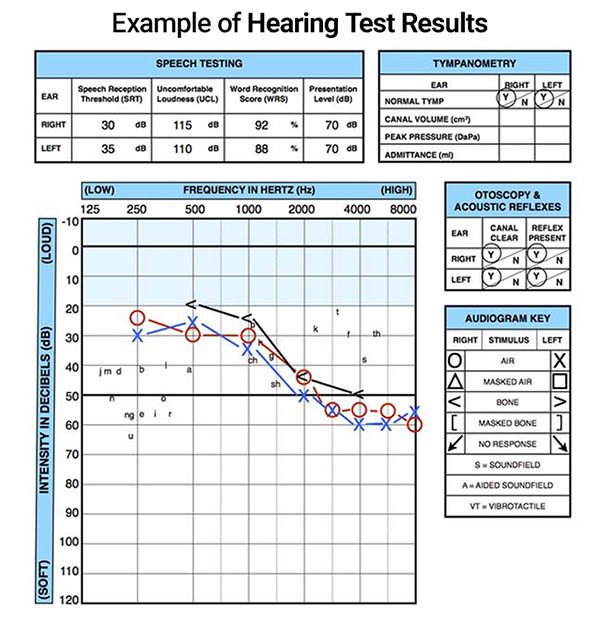
If you’re experiencing signs of hearing loss, your doctor will likely refer you to an audiologist (a hearing specialist) for testing. Hearing tests are simple and non-invasive.
A hearing evaluation takes about 20 minutes and typically includes:
- Pure-tone testing, where you wear headphones and listen for very soft sounds
- Speech testing, which checks how well you understand words
- Tympanometry, which looks at how your eardrum and middle ear are working
The tests help determine the type and severity of hearing loss, and guide the next steps in treatment.
What Are the Treatment Options for Hearing Loss?
If you have sensorineural hearing loss, hearing aids are the gold standard treatment. Before you dismiss the idea, hear us out. Today’s hearing aids are a far cry from the big old banana-shaped ones from years ago. Most modern versions are small, discreet, and technologically advanced, connecting directly to cell phones and TVs.
Finding the right hearing aids can be an art and a science, so working with an experienced audiologist who takes your lifestyle, needs, and budget into account helps. When possible, choose a pair of hearing aids that come with a trial period so you can return them if they’re not right.
There are also assistive listening devices that can help in specific situations, like amplifiers for watching television, special headphones for phone calls, and captioning glasses.

Our goal is to protect your personal health information. Please keep your questions general and do not post personal medical information here. If you have a specific question, please email events@tcoyd.org.
Great info and thanks for the chuckles (people who yodel) throughout this page. My husband has been T1 for over 60 yrs & I try to keep informed so we can do this together. Luckily, he takes very good care of himself. Thanks again!🌻
Thanks for your kind words! Your husband is lucky to have such a caring and involved partner in his diabetes care!