Ozempic Tablets vs. Ozempic Injections
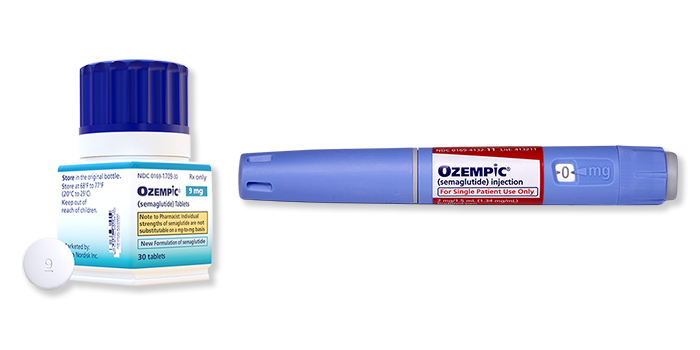
When it comes to GLP-1 pills vs injections, this is the closest comparison we have because both of these medications contain the same active ingredient: semaglutide.
Oral semaglutide was originally introduced in 2019 under the name Rybelsus. Novo Nordisk later developed a more efficiently absorbed, lower-milligram formulation and branded it as Ozempic pill.
Think of Ozempic’s new GLP-1 pills as the next generation of Rybelsus, not an identical tablet with a new name. The newer 4 mg and 9 mg Ozempic pills correspond to the older 7 mg and 14 mg Rybelsus doses, but the products are not interchangeable milligram for milligram.
What Do the Numbers Show?
The table below uses results from separate clinical trials. These were not head-to-head studies, so the numbers should not be used to calculate precisely how much more effective the injection is.
Participants started with different A1c levels and body weights, took different background medications, and were followed for different lengths of time.
So, what does this say about GLP-1 pills vs injections?
At first glance, the Ozempic injection appears considerably more powerful (not just slightly more powerful). But the people in the injection study began with a higher A1c, and higher starting A1c levels usually allow for a larger reduction. They were also treated for a longer period of time and were taking other diabetes medications.
The fairest conclusion is that both forms of semaglutide are effective, but the highest injectable dose generally produces larger average A1c and weight reductions than the currently approved oral diabetes dose.
That does not mean every person needs (or would benefit from) the maximum effect.
Are the Side Effects Different?
Because the Ozempic pill and injection contain the same active ingredient of semaglutide, their side effect profiles are generally similar.
The most common problems are:
- Nausea
- Diarrhea
- Vomiting
- Abdominal discomfort
- Constipation
- Decreased appetite
These symptoms are most likely to occur when treatment begins or when the dose is increased. They commonly improve over time, which is why the dose is raised gradually.
However, not everyone’s symptoms disappear after the first month. Some people need a slower titration, a lower maintenance dose, or a different medication altogether.
Severe or persistent vomiting, diarrhea, dehydration, or abdominal pain should always be reported to your healthcare professional.
An Important Detail About Taking the Ozempic Pill
The Ozempic GLP-1 pill has very specific instructions on how to take it because only a small amount of the medicine is absorbed through the stomach.
It must be taken:
- First thing in the morning on an empty stomach
- With plain water (and no more than 4 ounces)
- At least 30 minutes before eating, drinking anything else, or taking other oral medications
These instructions are important. Taking it with breakfast, coffee, other pills, or too much water can reduce how much GLP-1 medication your body absorbs.
Foundayo vs. Mounjaro
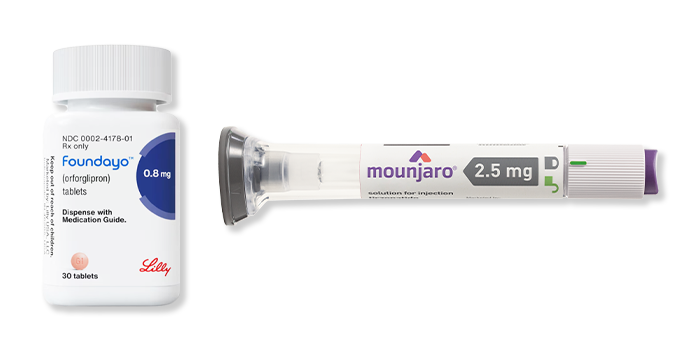
Foundayo (orforglipron) is a once-daily oral GLP-1 medication. It’s currently FDA-approved for chronic weight management in adults with obesity, and not yet approved for type 2 diabetes. Lilly has completed several large diabetes trials and has announced plans to seek a type 2 diabetes indication soon.
Mounjaro (tirzepatide) is a once-weekly injection approved for type 2 diabetes. Unlike Foundayo, it activates both the GLP-1 and GIP receptors, so looking at the two side-by-side is not an apples-to-apples comparison.
Here are representative results from separate studies involving people with type 2 diabetes who were taking metformin:
Both results are extremely impressive. An A1c reduction of more than 2 percentage points is a major improvement. Mounjaro produced greater average weight loss in its study, but the medications were not tested directly against each other, and the trials were conducted for different lengths of time.
The more useful message is that a GLP-1 pill can now produce A1c and weight reductions that approach what we have traditionally expected from some injectable medications.
Are the Side Effects Similar?
Both Foundayo and Mounjaro most commonly cause gastrointestinal side effects, including nausea, diarrhea, vomiting, constipation, indigestion, decreased appetite, and abdominal discomfort.
It is difficult to say that one medication universally causes more side effects than the other because the studies involved different people and used different methods. With both medications, symptoms occurred most often while the dose was being increased and generally became less frequent over time.
More Flexibility with Foundayo
One major convenience of Foundayo is that it can be taken at any time of day, with or without food, and without restrictions on how much water you drink.
That is very different from oral semaglutide and may be important for people who have complicated morning medication routines, or who simply do not want to wait 30 minutes for breakfast or coffee.
What About Heart, Kidney, and Liver Benefits for Orals and Injectables?
We should not assume that every medication in this class provides exactly the same protection.
Ozempic injections have been shown to reduce major cardiovascular events in people with type 2 diabetes and established cardiovascular disease. They are also approved to reduce certain serious kidney outcomes in people with type 2 diabetes and chronic kidney disease.
Ozempic tablets have demonstrated cardiovascular benefit in people with type 2 diabetes who are at high cardiovascular risk.
Mounjaro has demonstrated cardiovascular safety and has many favorable effects on cardiovascular risk factors, but its current U.S. indication is for glucose management, not specifically for reducing heart attacks or strokes. They are waiting for formal FDA approval.
Foundayo has improved blood pressure, cholesterol, triglycerides, and other risk markers in studies, but it has not yet been proven to reduce major cardiovascular events.
Kidney protection, liver support, cardiovascular impact, and other benefits demonstrated with certain injectable medications may eventually be found with some oral medications as well. But until those studies are completed, we can’t automatically transfer the benefits of one drug or formulation to another.
Key Takeaways: GLP-1 Pills vs Injections
If your goal is to achieve the greatest possible average A1c reduction or weight loss, the highest-dose injectable medications currently tend to have the edge.
But that does not automatically make an injection the right choice across the board.
Not everyone begins treatment needing a 2-percentage-point A1c reduction or a 15% to 20% loss of body weight. Many people can reach their individual goals with an oral medication or a lower dose, and they may experience fewer side effects along the way.
Your decision should consider:
- Your starting A1c and weight
- Your heart, kidney, and liver health
- Other medications you take
- Potential side effects
- Insurance coverage and cost
- Whether you prefer a daily pill or a weekly injection
- How likely you are to take the medication consistently
The “best” medication is not necessarily the one that produced the biggest results in a clinical trial. It is the medication that safely helps you reach your goals and that you can realistically continue taking over the long term.
And although these medications may sometimes seem like the closest thing we have to a magic pill, they still work best alongside nutritious eating, physical activity, adequate sleep, and other healthy habits. I wish GLP stood for “Grab Lots of Pizza”…if it did, I would have prescribed it for myself years ago!
Explore our resource library and video vault, and subscribe to our monthly digital newsletter for more tips, tools, and expert guidance on how to take control of your diabetes.



Our goal is to protect your personal health information. Please keep your questions general and do not post personal medical information here. If you have a specific question, please email events@tcoyd.org.
John Buse told me that many participants in the Rybelsus clinical trial took their medication in the middle of the night when they had a bathroom break rather than taking in the morning and waiting to eat breakfast. Could this also be done with the new Ozempic pill? I (as a diabetes educator) have also taught many people how to start injections with insulin or Ozempic and the barrier to beginning is very low with about 5-minutes of training. The other advantage of Ozempic is the ability to titrate the dose up slowly over time to reduce the side effects. Does this feature and the clinical trial data change what you recommend to patients? Mark Harmel
Hello Mark,
You know and I know that John Buse is one of the smartest endocrinologists in the country, and I totally agree with him. The Ozempic pill is the same as Rybelsus, so you could take it in the middle of the night, when you get up to urinate. And by the way, you didn’t tell me you were on it. 😊 I appreciate everything you do for patients, as well.