
What is Grownup T1Ds?
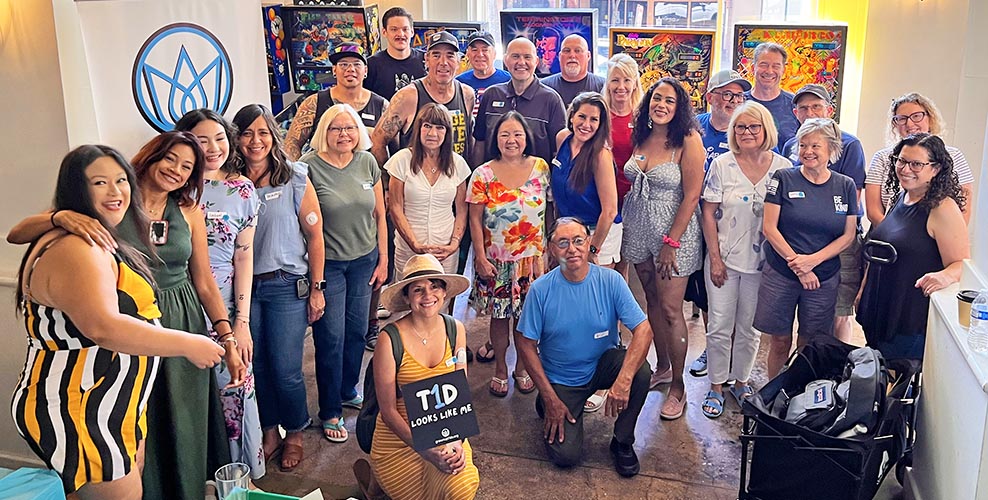
Grownup T1Ds is a nonprofit building free, in-person communities for adults living with type 1 diabetes, with a particular focus on people in midlife.
Rather than hosting a one-time meetup and moving on, we’re building ongoing local communities throughout the country. People come back, form friendships, exchange numbers, check on each other and have something to look forward to together.
Our meetups bring together an incredible range of experiences. We’ve had someone attend just three weeks after being diagnosed alongside people who have lived with type 1 for more than 60 years. One gentleman in our community lived with it for 71 years.
We’ve also had people drive as long as four hours to attend and continue making that drive meetup after meetup. We have a strong number of men who attend, too, which has been wonderful to see.
Family and friends are always welcome as well. Type 1 doesn’t affect only the person living with it. The people who love us are part of this journey, too, and we want them to feel included in the community.
We’re social, but we’re also a support community in a very nontraditional way. There’s laughter, friendship and fun, but there’s also a room full of people who understand when life with type 1 gets hard.
The common denominator isn’t age or how long you’ve had type 1. It’s having a place where you can connect with people who truly “get it”.
What was the “aha” moment that made you realize there needed to be a community like this for adults with T1D?
The isolation of the pandemic had a lot to do with it. Living with diabetes can already feel isolating, and COVID made that disconnection even greater.
Then, toward the end of the pandemic, my sister was diagnosed with type 1 in her 50s.
I had lived with type 1 since childhood, but watching her experience an adult diagnosis opened my eyes to something I hadn’t fully understood before. She wasn’t given much diabetes education after her diagnosis, something we’ve since heard from many people diagnosed as adults. Suddenly, she was expected to figure out insulin, carb counting, blood sugar management and all the decisions that come with type 1.
At the same time, she had a very demanding career, a family and a full life that didn’t stop because diabetes had entered it. Watching her try to juggle all of that made me realize how different a type 1 diabetes adult diagnosis can be.
It also made me look at my own generation differently. I was diagnosed in 1981. Many of us diagnosed decades ago grew up hearing frightening predictions about our futures. We weren’t necessarily expecting to reach midlife and be navigating careers, families, menopause, aging parents, retirement and everything else that comes with this stage of life.
Yet here we are. So many of us.
On one side are those of us who have carried type 1 for much of our lives. On the other are people being diagnosed well into adulthood and trying to figure out how diabetes fits into lives they’ve already built.
I realized there was this large adult population that needed more opportunities to find one another. That’s really where the idea for Grownup T1Ds took shape.
You describe the meetups as social rather than educational. Why was that distinction important?
It was very intentional. People living with type 1 spend enough of our lives in clinical environments. We see endocrinologists, get labs, undergo screenings, deal with pharmacies and insurance companies and spend every day looking at numbers.
Sometimes we just want to be people. Not be defined by diabetes.
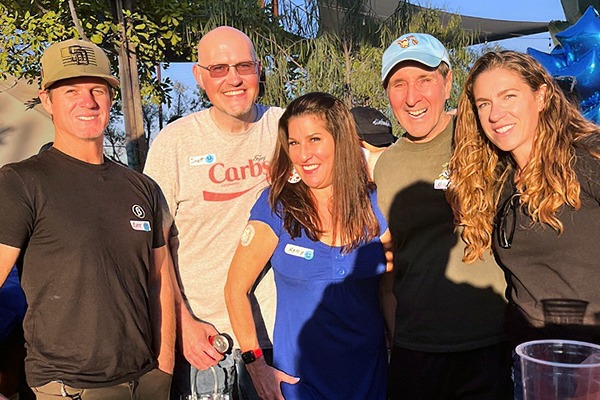
That’s why most of our meetups happen at restaurants, breweries, sports bars, cafes, parks and other places where people would normally get together with friends. We eat, laugh, talk and get to know each other. Diabetes brings us together, but it doesn’t have to dominate the conversation.
That said, diabetes education absolutely has a place in what we do. We just try to make it relevant to what adults in our community actually want and need.
We’ve held educational meetups with a licensed therapist who lives with type 1, as well as sessions with Dr. Steve Edelman on GLP-1 medications and Dr. William Polonsky of the Behavioral Diabetes Institute. We also hosted a virtual session that broke down clinical trials in a simple, approachable way for people who were interested but didn’t know where to begin. We’ve even had a licensed Medicare professional who lives with T1D available to answer questions for people approaching or navigating Medicare.
There’s also an incredible amount of informal diabetes education happening naturally. People share experiences, diabetes resources, tips and things they’ve learned along the way. We have physicians, nurses, diabetes educators, dietitians and other health care professionals who live with type 1 and attend our meetups. When they’re there socially, though, they’re there as people living with type 1, not as clinicians treating patients.
Our medical teams may see us every three to six months. Diabetes is happening every single day. We aren’t trying to replace medical care or diabetes education. We’re building the community that exists in between.
What are some of the challenges of living with T1D in your 40s, 50s, 60s, and beyond that you don’t think get enough attention?
The context of your life changes.
You’re managing type 1 while building or maintaining a career, raising a family, going through menopause, experiencing divorce or loss, caring for aging parents, preparing for retirement or eventually navigating Medicare.
At the same time, health care often becomes more complicated. There are more screenings, procedures and medications. We’re getting mammograms and colonoscopies. We’re dealing with changing hormones, scar tissue from years of injections or infusion sites and the cumulative physical and emotional burden of managing a relentless condition year after year.
There’s also the mental load. Being experienced at diabetes doesn’t mean you stop getting tired of it. You’ve still made an unimaginable number of decisions about food, insulin, exercise, technology and blood sugar, and you still have to wake up and do it again tomorrow.
Then there’s a very different challenge for someone diagnosed in midlife. They may have spent decades never thinking about carbohydrates, insulin or blood sugar. Suddenly, they have to learn an entirely new routine and figure out how to fit a demanding disease into a life that’s already full.
In many ways, they have to learn a whole new language: insulin-to-carb ratios, correction factors, CGMs, pumps, time in range, highs, lows and all the decisions that come with them. And they’re learning it while still managing careers, relationships, families and everyday responsibilities.
Life doesn’t stop to give you time to learn diabetes. You have to learn how to fit diabetes into the life you’re already living.
We talk a lot about diabetes technology and numbers, and those things matter. But we also need to talk about the person carrying all of it.
Can you tell us about a moment at one of the meetups when you thought, “This is why we created Grownup T1Ds”?
There have been so many that it’s difficult to choose one.
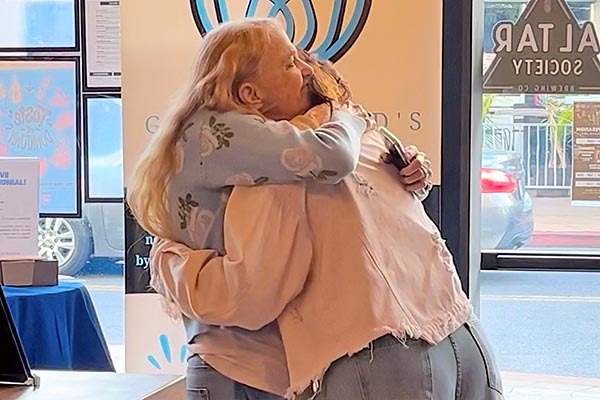
At one meetup, a woman who had been laughing and having a great time suddenly broke down crying at the table. She was facing eye surgery and she was terrified.
Immediately, people gathered around her. Several had been through similar experiences. They shared what it had been like, what to expect and what they wished they had known. Mostly, they comforted and reassured her that she wasn’t facing it alone.
I’ve watched the community show up in other ways, too. Someone loses health insurance and suddenly can’t access CGM or pump supplies, and people start figuring out how to help. Someone faces a frightening complication and remembers another person they met at one of our meetups who had been through something similar, so they reach out.
Those are the moments when I realize this is much bigger than getting together socially.
The social connection gets people together. The support and relationships that grow from it are what remain afterward.
Is there anything that you have learned from the people you’ve met through Grownup T1Ds that has surprised you?
One of the biggest things I’ve learned is that while we all live with the same condition, none of us experiences it exactly the same way.
Two people can look at the exact same blood sugar, A1C or time-in-range number and have completely different emotional reactions to it. One may feel proud while the other feels defeated.
That’s reinforced something we say often at Grownup T1Ds: We share, never compare.
I’ve also been surprised by how powerful fear can be. So many people are carrying fears about what could happen or what might happen someday. Fear of complications, severe lows or simply the unknown can have a real hold on people. Social media can sometimes add to that. While it can be a wonderful source of information and connection, we’re also exposed to other people’s frightening experiences, and it’s easy to start wondering, “Is that going to happen to me?”
I’ve also learned a lot from people who were diagnosed as adults. Because I was diagnosed as a child, diabetes became part of my normal very early. Listening to someone describe what it’s like to suddenly develop type 1 at 30, 50 or 60 has given me a completely different perspective.
The more people I meet, the more I realize how much is happening beneath the surface of living with type 1 that we don’t always see.
Where are your current chapters, and how can people get plugged in?
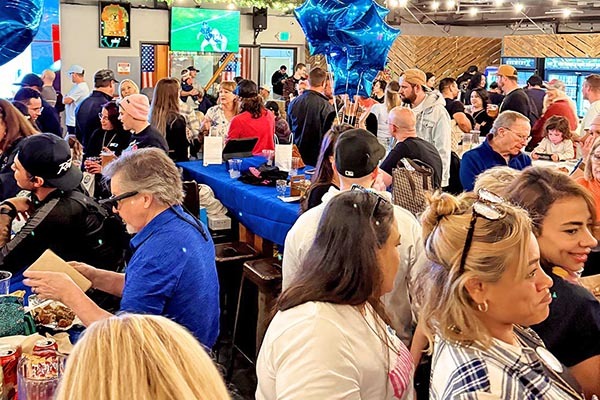
We have meetups throughout Southern California, along with chapters in New York City, Boston, the Philadelphia metro area, Atlanta, Pensacola, FL, Southeast Florida, and the Triangle area of North Carolina.
We’re also preparing to launch Boston, Southeast Florida and Seattle, with conversations happening in several additional cities.
People can find us through the Grownup T1Ds website and social media, join our email list or simply reach out directly.
In fact, many of our chapters have grown from people contacting us and saying, “We need this here.” Hearing from people in a community helps us see where there’s interest and where Grownup T1Ds might grow next.
If someone lives in a city where there isn’t a chapter, how can they help bring Grownup T1Ds to their community?
Reach out to us!
We expand when we see enough local interest and can identify volunteer chapter leaders who are passionate about building a consistent community in their area.
All of our chapters operate under the Grownup T1Ds nonprofit. We provide the structure, promotion, and support behind the scenes so our chapter leaders aren’t starting from scratch.
You don’t need to be a diabetes expert or professional event planner. We’re looking for people who care about bringing others together and want to help create the kind of community they would want to be part of themselves.
If someone wants Grownup T1Ds in their community, I want to hear from them. That’s how we know where the need is.
What are your hopes for the future of Grownup T1Ds?
Grownup T1Ds has grown faster than I ever imagined it would. People are reaching out from cities across the country asking us to bring a community to them, and we’ve even started hearing from people internationally.
That’s incredibly exciting, but the funding hasn’t kept pace with the growth.
We’ve been able to grow a lot as a volunteer-run nonprofit, but the growth has happened much faster than I ever expected, and the funding hasn’t kept up. If we want to continue expanding responsibly and keep our meetups free and accessible, we need funding.
We need donors, sponsors and partners who recognize that living well with type 1 diabetes is about more than managing glucose levels. The psychosocial side of diabetes matters, too. Diabetes anxiety, distress, burnout, isolation and the mental load of managing a condition every day can have a significant impact on a person’s well-being.
There is growing recognition in diabetes care that we need to support the whole person, not just treat the numbers. Peer support, meaningful connection and having a community of people who understand the lived experience are an important part of that. That’s the space Grownup T1Ds is working to fill.
My hope is that we can build the resources and infrastructure to meet the demand without losing what makes Grownup T1Ds special. I want someone to walk into a meetup in California, New York, Florida or anywhere else and experience that same feeling of belonging.
Eventually, I’d love to see Grownup T1Ds become international. We’ve already heard from people in other countries asking for something like this.
Growth for me isn’t simply about putting more dots on a map. I want every one of those dots to represent a real, lasting community.
The need is clearly there. Now we need the resources to keep up with it.
What do you wish you’d known about the power of peer support earlier in your own T1D journey?
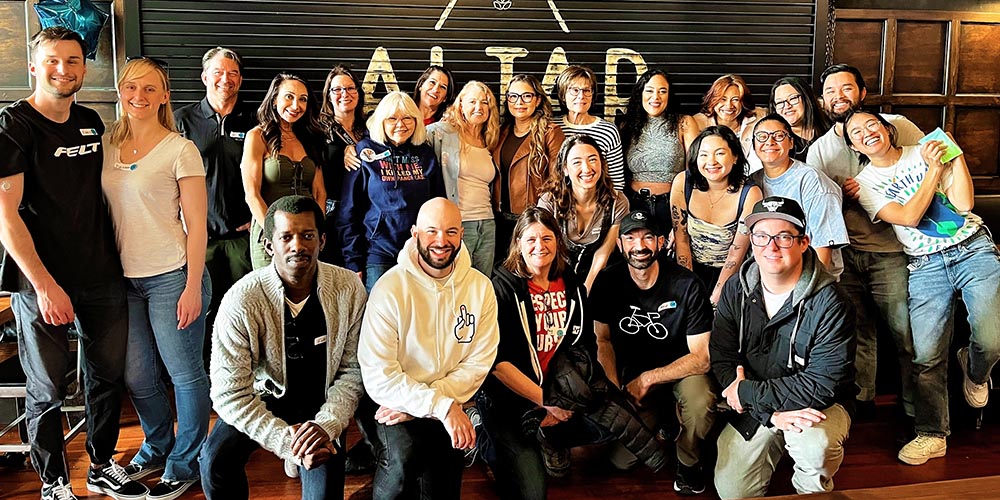
I wish I had understood the impact that being around other people with type 1 could have on the mental load of living with it.
I’ve been fortunate to have people who care deeply about me. But unless you live with type 1, it’s almost impossible to fully understand the constant decision-making, planning and problem-solving that goes on in the background every day.
There’s a freedom that comes with being around people who already know.
You don’t have to explain why an alarm is going off, why you’re staring at your pump, why you’re frustrated by a blood sugar that won’t move or why something that looks insignificant to everyone else has completely changed your day.
That’s the psychosocial piece I don’t think we’ve paid enough attention to. Diabetes distress and burnout are real. Feeling understood, being able to talk without judgment and knowing you have people you can reach out to can make a tremendous difference.
Peer support doesn’t replace medical care. It gives us something medical care can’t: other people who actually live this every day.
I wish I’d had that kind of community much earlier.
If someone with T1D is reading this and thinking, “I don’t really need a diabetes support group,” what would you say to them?
I’d probably say, “That’s OK. Neither did a lot of us.”
I think the words “diabetes support group” sometimes give people an idea of what they think it’s going to be, and Grownup T1Ds doesn’t necessarily look like that.
We’re a support community, but in a very nontraditional way.
You don’t have to walk in ready to talk about your feelings or even your diabetes. Come have lunch. Have a beer. Go bowling. Meet some interesting people. Bring your spouse, partner, family member or friend. Laugh and have a good time.
The support happens naturally.
Someone mentions an insurance problem you’ve had. Someone has the same pump issue. Someone understands what your blood sugar does during exercise. Someone has been through the procedure you’re worried about. Or maybe you simply realize how nice it is to be around people who don’t need an explanation.
Friends and family can be incredibly loving and supportive, and they’re an important part of this journey. That’s why they’re welcome at our meetups. At the same time, there’s a different kind of connection that happens when someone can simply say, “I get it,” and you know they actually do because they live it, too.
You may not think you need a support group. That’s fine.
But you might be surprised by how good it feels to have a community.
Anything else you’d like to add, please feel free!
For decades, diabetes care has understandably focused on keeping us alive and healthy: A1C, time in range, insulin, technology, screenings and complications.
All of that matters enormously.
But so does the person carrying those numbers.
People with type 1 are building careers, raising families, traveling, experiencing loss, falling in love, getting divorced, caring for parents, retiring and figuring out what the next chapter looks like. And they’re doing all of it while managing a condition that never takes a day off.
I think we’re finally paying more attention to the psychosocial side of living with diabetes and recognizing that health isn’t only about a number on a lab report.
Our doctors and diabetes care teams are incredibly important, but they’re not living the other 364 days of the year alongside us. That’s where community and peer support can be incredibly powerful.
For us, the social part and the support aren’t separate. They work together. You can be laughing with someone over lunch one month and reaching out to that same person when you’re struggling the next. That’s what real community looks like.
Type 1 diabetes doesn’t end in childhood, and support shouldn’t either.
That’s something we believe deeply at Grownup T1Ds, and it’s what we want to continue building in communities everywhere.
For more information and to find a chapter near you, visit GrownupT1Ds.com.

Our goal is to protect your personal health information. Please keep your questions general and do not post personal medical information here. If you have a specific question, please email events@tcoyd.org.