
- The race for a type 1 diabetes cure is finally kicking into high gear. Several companies are pursuing promising islet cell therapies that could restore the body’s ability to make its own insulin.
- Three different approaches are leading the charge: Vertex is using stem-cell-derived islet cells with traditional immunosuppression, Eledon is developing targeted immune protection, and Sana is gene-editing cells to help them hide from the immune system.
- Early human results are encouraging. In small studies, some participants have achieved insulin independence, dramatically reduced insulin needs, and excellent A1c and time-in-range results.
- The biggest hurdles are protecting the transplanted cells safely and making them last for the long haul.
- These treatments are still investigational, and continued clinical trials will determine how close we really are to a functional cure.
Reading Time: 4 minutes
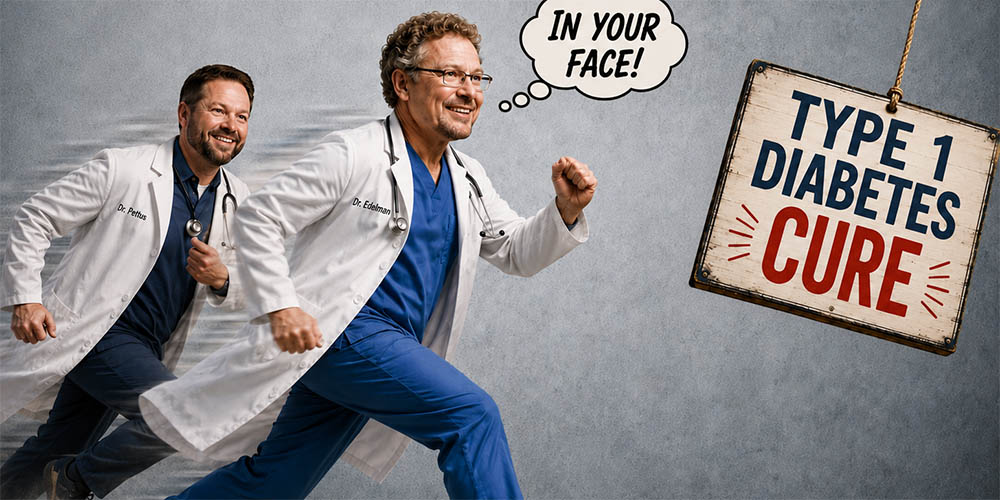
A cure for type 1 diabetes has been dangled in front of our noses for years like a carrot on a stick, with the promise that it’s only 5-10 years away. But it’s always been just out of reach, no matter how fast we ran toward it.
Until recently!
Over the past few years, research in the field has accelerated, and the race to find a type 1 diabetes cure is picking up speed.
Several companies are investigating novel approaches involving islet cell transplantation and gene therapy, each taking a different route toward restoring the body’s ability to safely and effectively make insulin.
Could islet cell transplantation be the breakthrough that gets us to the finish line?
How Islet Cell Transplantation Works
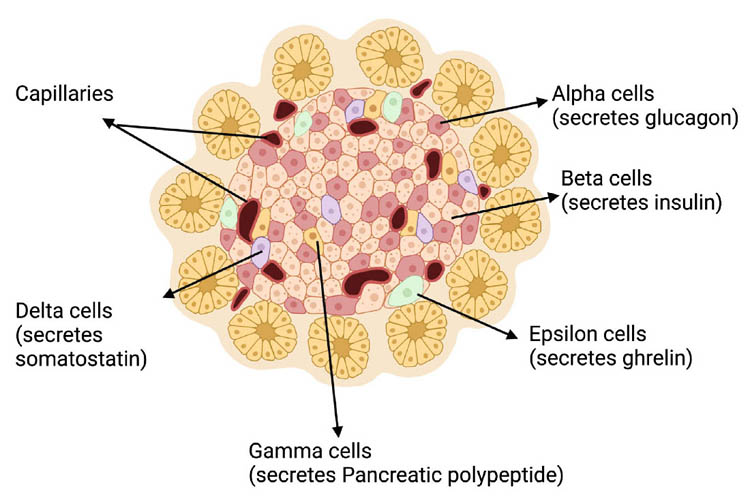
Inside your pancreas are tiny clusters of cells called islets. These contain beta cells which make insulin (when they’re functioning properly), along with other important hormone-producing cells.
When you have type 1 diabetes, your immune system attacks and destroys the insulin-producing beta cells in your pancreas. (We don’t know why this happens, but you can learn more about it here). Islet cell transplantation is designed to replace the damaged cells with healthy new ones.
Replacement cells can come from stem cells created in a laboratory, or from deceased organ donors. Either way, the healthy cells are infused into your body where they can begin producing insulin and regulating blood sugar.
However, even if the new cells start making insulin again, your immune system can still see them as “foreign” and destroy them. This is the big challenge that researchers around the world are trying to overcome.
Islet Cell Transplants for Type 1 Diabetes: Three Strategies Leading the Way
Three companies with different approaches are at the forefront of this research: Vertex Pharmaceuticals, Eledon Pharmaceuticals, and Sana Biotechnology.
Vertex: Zimislecel with Traditional Immunosuppressive Therapy
Vertex is one of the leaders in the field and closest to submitting for FDA approval. They’re currently conducting Phase 3 clinical trials of a therapy called zimislecel.
Zimislecel uses islet cells grown from stem cells in a lab. The cells are infused into the hepatic vein, allowing them to travel to the liver, where they take up residence and begin functioning like healthy pancreatic islets.
The liver is an ideal location because it has an abundant blood supply, allowing transplanted cells to receive the oxygen and nutrients they need to survive and function.
To prevent the immune system from attacking the new cells, people receiving zimislecel must take an immunosuppressive medication called tacrolimus. Tacrolimus helps protect the transplanted islets, but it also weakens the body’s natural immune defenses and can cause side effects. Side effects of tacrolimus may include an increased risk of infection and kidney damage.
Researchers are exploring ways to protect transplanted cells without requiring lifelong immunosuppression.
Results So Far
The Phase 3 FORWARD-101 islet cell transplant trial is still underway, but results from the first 12 of 50 participants enrolled have been promising:
- Each participant achieved an A1c below 7%
- Each participant had a time in range greater than 70%
- Each participant showed C-peptide production, demonstrating that the transplanted islet cells were producing insulin
- Average insulin requirements decreased by 92%
- No one experienced severe hypoglycemia
- 10 of the 12 participants became completely insulin independent
Participants were required to have had severe hypoglycemia before entering the study to improve the risk-benefit ratio, which is the risk of immunosuppressive therapy vs the benefit of improved diabetes control and avoiding severe hypoglycemia.
If Vertex’s Phase 3 clinical trial continues to show positive results, zimislecel could be the first FDA-approved stem cell-derived islet cell therapy for people with type 1 diabetes.
Eledon: Targeted Immunosuppressive Therapy
Tegoprubart is an investigational immunosuppressive therapy designed to protect transplanted cells without many of the toxicities associated with traditional immunosuppressants. It’s currently in Phase 2 clinical trials for kidney transplantation, but it has generated significant excitement in the field of islet cell transplantation for type 1 diabetes.
In an investigator-initiated islet transplant trial at UChicago Medicine, all 12 participants who received donor islet cell transplants while taking tegoprubart were able to stop using insulin and achieved A1c levels below 6% – very exciting!
This approach currently relies on islet cells from deceased donors, so supply is obviously limited.
Results So Far
Recent data from the investigator-initiated pilot study is encouraging:
- All 12 participants achieved insulin independence, producing their own insulin and no longer requiring exogenous insulin therapy
- All 12 participants achieved an A1c below 6.5%, with a mean most recent A1c of ~5.4%
- No severe hypoglycemic episodes were reported after the transplant
- No reports of kidney damage, nerve damage, or high blood pressure
Currently, participants continue to receive tegoprubart infusions every three weeks to prevent immune rejection of the transplanted cells.
The next step is to see if tegoprubart could be used with stem cell-derived islet cells made in a lab to make this therapy scalable.
Sana: Gene-Edited Islet Cells that “Hide” from the Immune System
Sana is taking a completely different approach. Instead of using immunosuppressant medications, they’re working on making the transplanted cells “invisible” to the immune system.
Using a gene-editing technology called CRISPR, changes are made to stem-cell-derived islet cells before they’re transplanted, so the immune system doesn’t see them as “foreign”. The goal is to evade both the autoimmune attack and the typical transplant rejection response.
With this technology, no immunosuppressive medications are needed, which is amazing for islet cell transplants!!
Results So Far
In the first human study, researchers transplanted genetically modified islet cells from a deceased donor into the participant’s forearm.
Because this was an early proof-of-concept study, the transplant contained only about 5% of the number of islet cells that would typically be needed to restore normal insulin production.
Early results have been positive:
- At one month, the participant showed that the gene-edited islet cells avoided immune detection and continued functioning after transplantation into muscle tissue.
- At six months, the cells remained safe, well tolerated, continued producing insulin, and evaded the immune system.
- At just over 12 months, the transplanted cells were still surviving and functioning. There haven’t been any severe adverse events, and there’s been no detectable immune response to the transplanted islets.
Sana plans to begin a Phase 1 clinical trial later in 2026 with SC451, a scalable stem cell-derived islet cell therapy that incorporates the same gene-editing technology.
When Will These Treatments Be Available?
Every new treatment goes through three phases of clinical trials before it can be submitted to the FDA for review, and the entire process can easily take 10 years or more. Vertex is poised to be the first to submit to the FDA.
Initially, islet cell therapies will likely be available for people with severe hypoglycemia unawareness. But as more tolerable immune suppression strategies are developed, these therapies will be accessible to many more people with T1D.
Islet Cell Transplant: Frequently Asked Questions
🧬 Will islet cell transplants work for someone who’s had diabetes for over 30 years?
These therapies are designed to replace the insulin-producing cells that have been destroyed, whether that happened five years ago or 30+ years ago. Eligibility in the beginning may depend more on factors such as overall health, the risks and benefits of treatment, and the specific requirements of each therapy.
📆 How long will the new islet cells last?
Unfortunately, we don’t know how long the cells will last yet because these therapies haven’t been around long enough. Long-term durability will likely determine how transformative these treatments ultimately become.
👎 Are there any downsides to islet cell transplant therapies?
The biggest concern with islet transplantation is the need for immunosuppressive medications, which is why researchers are working so hard to find ways to protect transplanted cells without suppressing the entire immune system. The transplant procedure itself can cause some risk, and we also don’t yet know how long transplanted cells will continue to function.
📋 Will insurance cover an islet cell transplant for type 1 diabetes?
It’s still too early to know what coverage will look like, but if these therapies are approved, they’ll likely be expensive at first. As with other cutting-edge treatments, insurance companies will probably cover them only for people who meet specific medical criteria. BUT as technology advances, manufacturing scales up, and more companies enter the field, costs often come down and access improves.
🙋 How can I be part of an islet cell transplant trial?
All clinical trials in the United States can be found on the clinicaltrials.gov website, and you can find information on how to sign up for them here.
Key Takeaways: Islet Cell Transplantation in Type 1 Diabetes – How Close Are We?
Living with type 1 diabetes involves carrying a daily mental and physical load that most people never see. Two recent studies looked at the impact of T1D beyond blood sugar management, with participants describing how worry and vigilance about the condition can affect sleep, work, exercise, travel, and their social life.
These investigational therapies have the potential to be life-changing for millions of people.
Islet cell transplantation for the masses used to be a pipe dream, but now it’s more a question of when it will happen, not if.
We’ve already overcome the major challenge of how to provide enough islet cells for everyone in the world with type 1 diabetes, so all we have to do now is figure out how to minimize the transplantation risks and make the transplanted cells last forever. Easy peasy!
Continued research is obviously needed, but progress over the last few years has been incredible. We’re watching one of the most promising areas of type 1 diabetes unfold before our eyes in real time, and we’re getting closer to that carrot and the finish line every day.
Financial support for this educational content was provided by Vertex Pharmaceuticals.
Explore our resource library and video vault, and subscribe to our monthly digital newsletter for more tips, tools, and expert guidance on how to take control of your diabetes.

Our goal is to protect your personal health information. Please keep your questions general and do not post personal medical information here. If you have a specific question, please email events@tcoyd.org.
Thanks for the update guys. But still, 10 more years? I’ve been hearing ’10 more years’ since I was first diagnosed 40 years ago (?!) isn’t there a way these therapies can be given a special shortened – and safe- approval process? Sheesh I’ll be dead by the time we see this cure. Kindly, Heather Johnston
I hear you, but in the information I recently saw, I do think it’s gonna be in the next five years.
I agree Heather. I’m in the same boat. 45yrs. We’ll both be dead by the time this goes into clinical trials.
So will inbe dead after 43 years
You are engaged enough to be online and learn and write to us, and we hope the functional cure comes soon for all of us!
Yea, for gods sake…
How many billions of dollars do we spend per year in healthcare for diabetes supplies and complications?
Why are we spending money to send spaceships to Mars when we have people sick on planet earth?
Been 60 years for me. I know I will be gone before it occurs but won’t need it when I’m dead anyway.
We are very encouraged by the progress researchers are making, and we hope a cure gets here sooner than expected!
Sana Biotech clinical trials
If you are looking for volunteers please contact me
You can search for active clinical trials on the clinical trials website here: https://clinicaltrials.gov/
Good luck!
I am the worst type one diabetic if there is a study contact me. Everything you hear normally is type 2. I really want to help type 1 diabetics please contact me
Hi there,
You can search for all active clinical trials here! https://clinicaltrials.gov/
Vertex should use Tegoprubart for their trial. It makes zero sense to keep using Tacrolimus when there are newer options.
Yes!
I totally agree, but it’s a very complicated business situation, so we will see. I don’t have any insight or information on that.
Hey Dr Edelman, I want to tell you first that I appreciate the work that you and Jeremy do so much! Question, the article says 10 years, why do you think it will be five years and which treatment do you think will be available. My son is six years old and a cure can’t come sooner. I’m assuming you mean the vertex trial which will not be approved for most. I’m a PA pediatrician by the way. I know you and Jeremy have a difference of opinion on when exactly a widespread functional cure will be available. You waited 56 years so far and likely a minimum of 60 total, so I know you’re the best person to ask!
Things are moving at a lightning speed, and there’s no question that something will be approved within the next 5 years. I’m very convinced. In the meantime, keep an eye on Sana, Eledon and Vertex. And who knows what venture they might do together to speed things up!
I was diagnosed in 1970 56 years ago they told me then they would have a cure within 10 years so I’m asking is this 10 years going to be another 56 year run time is of the essence
I know how you feel, and I honestly, truly feel confident that we are going to have something on the market much sooner than we have ever predicted. I am hoping 5 years away.
I was diagnosed in March of 1973. I am 70 years old. I’ve worked hard to support my health and be healthy with diabetes. I would love to be part of this trial to help establish a cure! This is the best news I have ever received for diabetes. I am the only member of my family past and grandchildren to have this disease. Thank God!
In reply to Anonymous.
Thanks so much for your comment! If you are interested in applying to be in a study, you can search for “type 1 diabetes” on the clinical trials website here: https://clinicaltrials.gov/, or you can go to each company’s website:
Vertex
https://clinicaltrials.vrtx.com/disease/type-1-diabetes-t1d
Sana
https://sana.com/our-pipeline/
Good luck!😊
I became a Type 1 diabetic in 1964. I am 84 years old. Should I continue to hope or is it over for me. I am in good health and still active. I am in range more than 90%. I am still praying for a miracle.
I think there is hope for you. At your age and level of activity, you should be very happy that you have the technology to keep you healthy. So I would say – and I say this to myself all the time – with the hybrid closed-loop systems, and staying in range most of the time, that I am almost as well as a person with a healthy pancreas.
I have MS & I’m on briumvi infusion every 6 months & no change in last 14 years (not worse) & have type 1 diabetes will I be able to take this new treatment?
I cannot know for sure, but I would keep up hope that it will be possible. In the meantime, get on the best hybrid closed-loop system that is good for you, and try to keep your time in range above 70%.
I have been waiting for 60 years for a cure. Enough is enough paying pharmeceuticals for reliance and unending “management” of this crippling disease. After six decades + it is now that the race for a cure begins? Please, answer this: The $$ made by diabetes drs, nurses, food educators, insulin, syringes, pumps, dka emergencies, et al is a trillion dollar industry, why would they want a cure??
Companies have made a lot of money developing devices, tools, and therapies for us type 1s, however, I don’t believe for one second that there’s been a delay in finding a cure because these companies are pushing to not come up with one. If you look at what’s happening recently, independent companies like Vertex, Eledon, and Sana are working very hard to come up with a cure. Also, the immune system is a tough nut to understand and crack. I can certainly understand why you feel this way, but hang in there and we can get our cures together at the same time!
I’d like to join the study. I’ve been type 1 for over 25 years. Started with shots, then pens, then a pump, back to shots, and now using a pump and cgm. I’ve been told by Mt endo I use more insulin than any diabetic he’s ever worked with yet I’m not insulin resistant. I was without insurance for almost a year I’m down to my last vials and my new insurance won’t cover the only insulin that has ever really helped me. I’m struggling and I’m tired of it please help!!
If you are looking to join a study, all active studies in the United States are listed on the clinical trials website here: https://clinicaltrials.gov/
For urgent insulin needs, you can explore this website that has assistance options: https://beyondtype1.org/get-insulin/ but please also reach out to your own endocrinologist who should be able to help you find a solution sooner.
How do you join the study ?
You can explore all actively recruiting studies in the United States here: https://clinicaltrials.gov/
I would really like to know if there is a truly a cure to help with type one. When I turn fifty seven I was diagnosed with type2. A few years later, my doctor said, I am actually type one.And i’m on insulin now , and I am64
Your story is not uncommon. There’s a lot of great information about LADA on our website, including this recent podcast we did here: https://tcoyd.org/lada-misdiagnosed-type-1-diabetes-adults/
We do believe a functional cure for type 1 diabetes will be coming in the next five years…research is moving faster than ever, and there are lots of companies working very hard on it!
More false hope, if, when and maybe
Need to live your lives and if it happens that will be a gift.
I have given millions in support of research, but when is hope not enough?
I don’t believe it. Sorry. The Tandum insulin pump and sensor has been great for me. I don’t believe that there will ever be a cure, but God bless Best and Banting!
I’m thankful for the efforts. We could warp speed of COVID vaccination. Can we warp speed a cure for type 1 diabetes?
10 years is a long time.
You’re right…we do hope it comes sooner than that.