
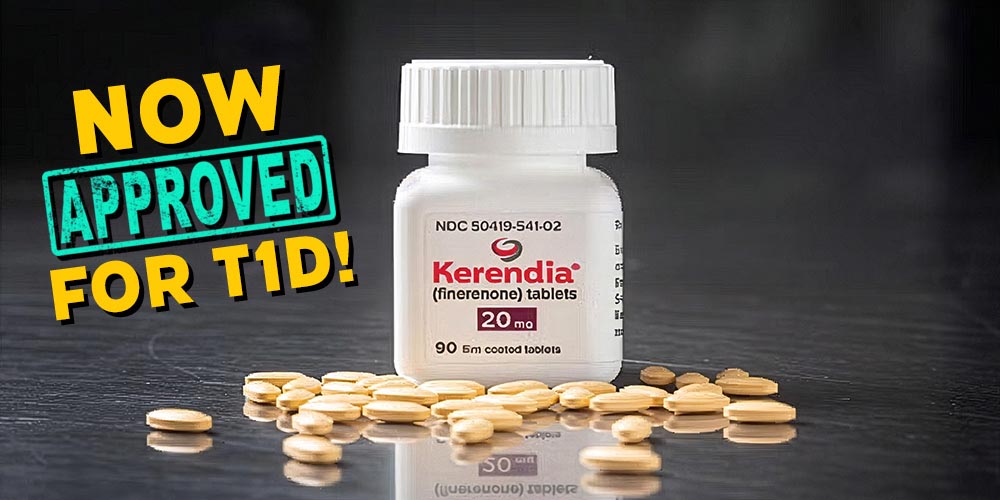
- Big news for type 1 diabetes! Kerendia is the first FDA-approved medication to treat a major complication of T1D.
- Kerendia helps protect the kidneys by reducing inflammation and scarring that can contribute to worsening kidney disease.
- In the FINE-ONE clinical trial, Kerendia reduced uACR, a key marker of kidney damage, by 25% compared with placebo.
- Kerendia’s FDA approval could be a sign that treatments for type 1 diabetes are finally expanding beyond insulin.
Reading Time: 3 minutes
We’ve waited over 100 years for a medication for type 1 diabetes beyond insulin, and that day has arrived! The FDA just approved Kerendia (generic name finerenone) to treat chronic kidney disease (CKD) in people with T1D.
Why is this such a big deal?
Because Kerendia is the first medication approved for people with type1 that treats a common and very serious complication of the condition.
Now, if you’re a diabetes history nerd and you’re thinking, “Symlin (amylin analog) was approved for type 1s in 2005”, you are absolutely right, but it didn’t address a complication (and it’s off the market now due to a lack of sales), so we aren’t putting it in the same category. The benefits of replacing the natural hormone amylin are now just being realized, with newer therapeutic approaches for type 1 and type 2 diabetes.
For anyone who bet on SGLT2s or GLP-1s to be the first adjunctive therapy approved for type 1s, new kidney medication Kerendia swooped in and took the win.
The Connection Between Diabetes and Kidney Disease
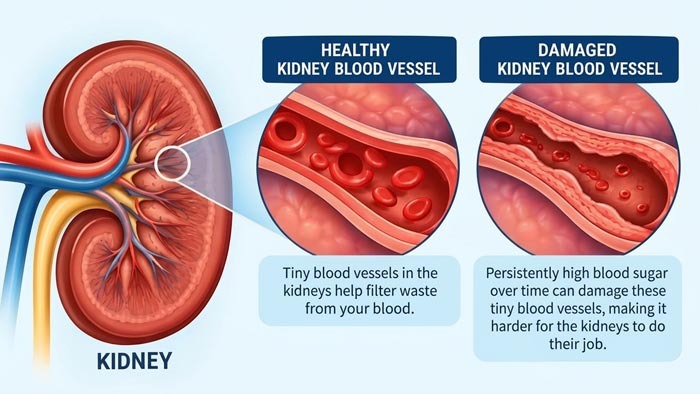
Your kidneys have a very important job – they filter waste and extra fluid out of your blood.
When you have diabetes, persistently high blood sugar over time can damage the tiny blood vessels in the kidneys, making it harder for them to filter blood properly.
This type of kidney damage is called diabetic kidney disease, which is a form of chronic kidney disease (CKD).
Kidney disease is not inevitable…keeping your blood glucose, blood pressure, and cholesterol in a healthy range can have a significant impact on kidney health. There are also additional pillars of treatment that can reduce the progression of kidney disease.
The 6 pillars to prevent and reduce the progression of kidney disease are:
- Blood pressure control
- Glucose control
- ACE inhibitors and ARBs
- SGLT2 inhibitors
- GLP-1 RAs
- nsMRAs
Theoretically, you could use all of them at the same time, with your doctor’s supervision.
One of the tricky things about kidney disease is that there aren’t usually symptoms in the early stages. In fact, most people are diagnosed when kidney disease has progressed to an advanced stage, way past the point of effective prevention strategies.
This is why regular screening – at least annually – is so important.
Diabetic eye disease, heart disease, and liver disease are similar in that way – there generally aren’t symptoms in the early stages. Hope you’re getting the picture that regular screening is super important!
What Is Kerendia For and How Does It Work?
Kerendia is a once-daily oral medication that helps protect the kidneys from worsening kidney disease. It’s part of a newer class of medications called non-steroidal mineralocorticoid receptor antagonists (nsMRAs).
Your body naturally makes proteins called mineralocorticoid receptors (MRs) that are activated by hormones like aldosterone and cortisol. When these receptors become overactivated, they can contribute to inflammation and scarring (fibrosis) in the kidneys, heart, and blood vessels. Kerendia blocks these receptors, helping reduce some of that inflammation and fibrosis.
Kerendia’s FDA approval for type 1 diabetes is new, but Kerendia was approved for type 2 diabetes in 2021, so it has several years of real-world experience behind it.
What the Study Showed
The Phase 3 FINE-ONE trial studied 242 adults with type 1 diabetes and chronic kidney disease. The main goal of the study was to see whether Kerendia could reduce uACR, or the amount of albumin leaking into the urine. The uACR test is a simple urine test that’s now considered the most important test to follow for CKD.
Why should you care about albumin in your urine?
Healthy kidneys generally keep proteins such as albumin in your blood. When the kidney’s filtering system becomes damaged, more albumin can leak out into the urine. Increasing amounts of albumin in the urine can be an early warning sign of kidney damage.
After six months, participants in the study who were taking finerenone had a 25% greater reduction in uACR compared with placebo, showing that Kerendia reduces the albumin-to-creatinine ratio and slows the progression of diabetic kidney disease.
Kerendia Side Effects
Kerendia is generally well tolerated, but the most common clinically relevant side effect is hyperkalemia, which is elevated potassium in the blood. In the FINE-ONE trial, hyperkalemia occurred in about 10% of people taking finerenone compared with 3% taking placebo.
Fortunately, there are ways to manage hyperkalemia in the small percentage of people who develop it, so they can continue taking Kerendia.
Your doctor should check your potassium levels and kidney function before starting Kerendia, and continue to monitor them while you’re on the medication.
Protecting Kidneys with Kerendia: Frequently Asked Questions
🫘 Does Kerendia cure kidney disease?
Unfortunately, no – there isn’t currently a cure for chronic kidney disease. But treatments like Kerendia that protect kidneys and address kidney disease early can help reduce the risk of the disease getting worse.
🔻 Does Kerendia lower blood sugar?
Kerendia is not a blood-sugar-lowering medication. It protects the kidneys and heart by reducing inflammation and other processes that can contribute to organ damage. Kerendia doesn’t replace insulin or other medications that lower blood glucose.
💊 Do I still need to take an ACE inhibitor, ARB, SGLT2, or GLP-1?
Kerendia is considered an add-on therapy, not a replacement for other medications. Your doctor will determine the right treatments for you based on your kidney function, blood pressure, cholesterol, potassium level, and cardiovascular health.
🚫 Is there anyone who should NOT take Kerendia?
You should not take Kerendia if you take medications called CYP3A4 inhibitors (ask your healthcare provider if you aren’t sure if you’re taking one) or if you have adrenal insufficiency. Your doctor should tell you about any additional Kerendia side effects, and should also check your potassium levels and kidney function before starting treatment.
⏳ Is there a way to prevent kidney disease in the first place?
Yes! Many of the things that help you manage diabetes can also help protect your kidneys. Do your best to keep your blood sugar and blood pressure in a healthy range, avoid smoking if you can, stay physically active, and keep up with regular checkups and kidney screenings.
Routine tests like the eGFR (estimated glomerular filtration rate) and urine albumin-creatinine ratio (uACR) can evaluate how well your kidneys are working and detect early signs of kidney damage.
If kidney disease does show up, treatments like Kerendia can help slow its progression and protect your kidneys from further damage. Since kidney disease is silent in the early stages, regular screening is one of the best ways to catch it early.
Kerendia for Type 1 Diabetes: Key Takeaways
For the first time in the history of ever, there’s a new FDA-approved treatment for people with type 1 diabetes, and its name is Kerendia. Please don’t run out there and try to get kidney disease just so you can be part of this historic moment – just know that if you do develop it at some point down the road, there is a treatment available that can help slow the progression of the condition.
Kerendia’s benefits also have the potential to go beyond kidney health. In type 2 diabetes, Kerendia has been shown to protect the heart by reducing the risk of heart attack, cardiovascular death, and hospitalization for heart failure. We don’t have the same data in type 1 diabetes yet, but we’ll be keeping an eye on it as research continues.
Kerendia’s FDA approval is a sign that treatments for type 1 diabetes are finally expanding beyond insulin. For anyone anxiously awaiting the FDA approvals of GLP-1s and SGLT2s for type 1 diabetes, they may not be too far behind, so start clearing out space in your medicine cabinet!
Explore our resource library and video vault, and subscribe to our monthly digital newsletter for more tips, tools, and expert guidance on how to take control of your diabetes.

Our goal is to protect your personal health information. Please keep your questions general and do not post personal medical information here. If you have a specific question, please email events@tcoyd.org.