
What Is Basal Insulin?
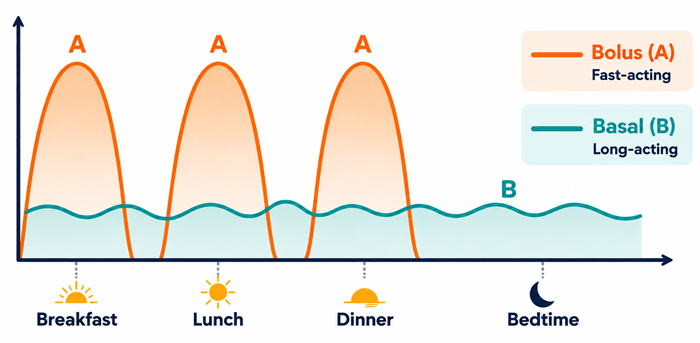
Basal insulin is the long-acting “background” insulin that works around the clock to help keep your blood sugar steady between meals and overnight.
Unlike fast-acting insulin, which is taken at mealtimes to cover the rise in blood sugar from what you eat, a good basal insulin works slowly and steadily, without big peaks and valleys.
Common brands of basal insulin include the older, first-generation brands like Lantus and Levemir, and the newer, second-generation basals like Tresiba and Toujeo.
Many people with type 2 diabetes eventually need basal insulin because type 2 diabetes is a progressive condition. That means that over time, your pancreas may produce less insulin, and your body may become less responsive to the insulin you do make.
As a result, your blood sugar can become harder to control, even if you’re doing everything “right.”
How Does Weekly Basal Insulin Work?
What makes weekly insulin different is the way it’s delivered.
Awiqli attaches to albumin, a protein naturally present in the blood. Think of albumin as a storage reservoir: it holds most of the insulin, with small amounts gradually becoming available to work. The insulin is also modified to resist breakdown.
Onswik links insulin to a piece of an antibody called the Fc portion. This acts like a protective carrier, slowing the insulin’s removal and allowing it to be recycled back into the bloodstream instead of quickly broken down. That keeps its glucose-lowering effect going throughout the week.
Weekly basal insulin is injected subcutaneously into the thigh, upper arm, abdomen, or just about any place on your body with subcutaneous fat, just like daily basal insulin. Both Awiqli and Onswik provide a steady basal insulin effect over seven days.
Is Weekly Basal Insulin as Effective as Daily Basal Insulin?
The short answer is yes.
Onswik was studied in over 3,400 adults with type 2 diabetes in the QWINT clinical trials, with results showing that it lowered A1c at least as well as daily basal insulin, and in some cases more.
The ONWARDS trials for Awiqli included nearly 3,800 adults with type 2 diabetes, and researchers found that Awiqli was also just as effective at lowering A1c and providing blood sugar control as daily basals.
Many study participants in both trials said they liked the convenience of weekly insulin, preferring it over the daily basal insulin option.
Once-Weekly Insulin Safety & Side Effects
The risk of severe hypoglycemia in the type 2 diabetes clinical trials for both weekly insulins was about the same as with daily basals.
However, low blood sugar can happen with any insulin or glucose-lowering medication, so you still need to know the signs and symptoms of hypoglycemia and know how to treat a low blood sugar if it does occur.
In studies involving people with type 1 diabetes, weekly basal insulin was associated with a higher risk of hypoglycemia, so it’s not currently approved in the United States for people with type 1.
Pros and Cons of Once-Weekly Basal Insulin
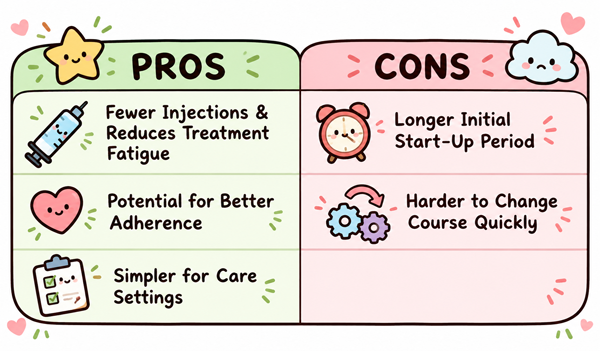
As with any medication or treatment therapy, there are benefits and trade-offs. Your doctor can help weigh the pros and cons to see if weekly insulin would be a good fit.
Pros of Weekly Insulin:
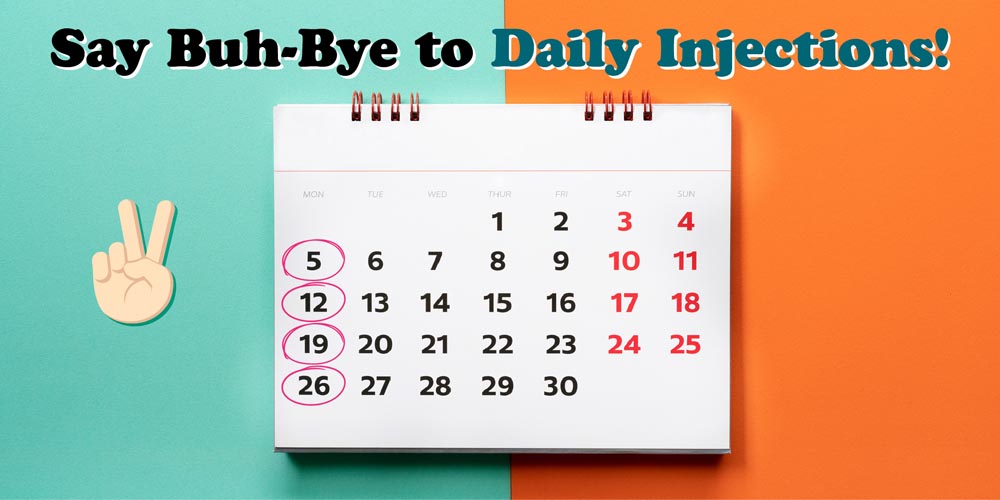
- Fewer injections: One injection per week instead of seven.
- Reduced treatment fatigue: Fewer injections can make insulin feel less burdensome.
- Potential for better adherence: A simpler routine could make it easier to stay on track.
- Simpler for care settings: It could be easier for people who receive insulin from caregivers.
Cons of Weekly Insulin:
- Longer initial start-up period: It can take a few weeks for weekly insulin to reach its target level, and finding the right dose requires close monitoring with your healthcare team.
- Harder to change course quickly: It can be harder to make rapid adjustments if your insulin needs change. For example, if you get sick or are hospitalized and you stop the medication, the effects don’t wane as quickly as with daily basal insulin.

Our goal is to protect your personal health information. Please keep your questions general and do not post personal medical information here. If you have a specific question, please email events@tcoyd.org.
I’m a CDCES and very much like this quick to the point info on the the Once weekly basal insulins. However, even after listening to an ADCES webinar regarding I’m still unclear about what to do with the dosing for upcoming surgery or colonoscopy, fasting? Are you able to give some insight on this as I know I will get those questions from our patients soon.
Thank you.
Of course, details of the patient’s type 2 diabetes history and their blood sugar control is important, however, remember basal insulin typically does not change before surgery or other procedures. In fact, most people’s blood sugars goes up due to the stress of surgery, and that is easily taken care of with insulin in the IV fluid. So as long as the anesthesiologist knows that there’s insulin on board, there should be no problem at all.
Hello. I was excited to read this until I got to the end of the article and read “not approved for Type 1”! Will us type 1 folks see a weekly basal anytime soon? Thanks.
It turns out that in both of the once-weekly basal insulin studies that were done by Lilly and Novo, it showed that people with type 1 had a higher rate of hypoglycemia 2-3 days after the injection. That was unacceptable to the FDA, so I do not think it will be available for type 1s anytime soon in the United States. However, if you are really dying to get it, you could go to Europe or Canada where it has been approved for type 1. I would just make sure you’re on a CGM and watch yourself closely, especially the first 2-3 days after the injection.
I have an insulin resistant dog we are dosing 20 units of long acting (protamine Zinc) twice daily.
Was your product tested in canine subjects? The protamine Zinc is costing us $400 USD bi weekly.
Any helpful information on your product in dogs ?
Thank you,
James Y.
I do not know specifically if they tested these insulins in animals, however, companies often test new products in animals before they go to humans. Saying that, it’s a great question for your veterinarian. I would be surprised if once-weekly basal insulin was not an excellent choice, however, I am not a vet! I do know that medications for animals seem to be a lot higher than they are when used in humans, which never made any sense to me. Maybe that’s why my veterinarian drives a Ferrari!
I have bent on hullhug and Lantus a long time would help me better in this one
It would be best to speak with your healthcare provider about it since they know you and your health history personally.
How about type 1.5 conditions is it recommended?
IF you are referring to LADA, then the answer is no, however, if you have more of a type 2 insulin-resistant, insulin-requiring diabetes, then yes it may be helpful. But obviously you need to speak to your healthcare provider.
Does this replace metformin? Im also on 15mg Mounjaro. A1C IS RUNNING 7.8 to 7.2
In this situation, generally speaking, I would not recommend taking anything off, including metformin, but adding weekly basal insulin might be what you need to get your A1c closer to 7 (or below 7) most of the time. But please consult with your own physician about this as a possible add-on.
Where do I get it
You’ll need to speak with your doctor, because weekly basal insulins require a prescription.