

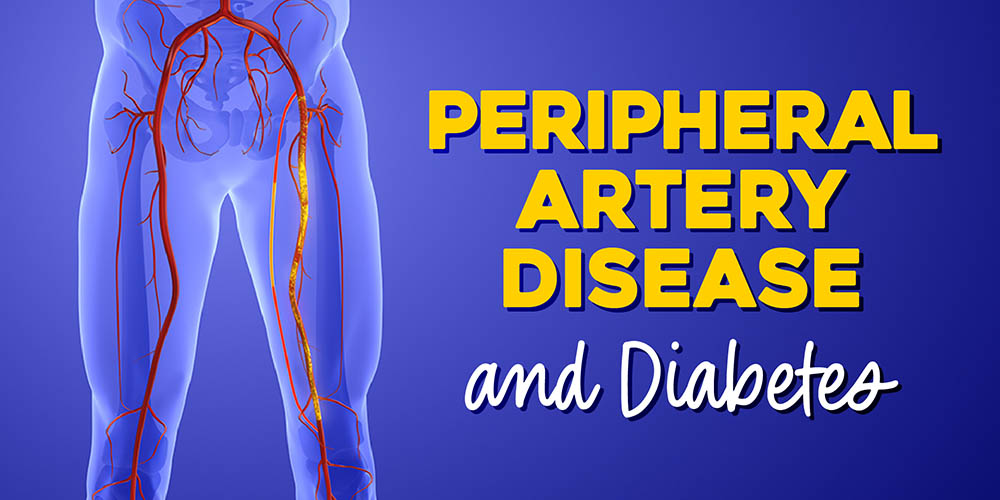
What Is Peripheral Artery Disease?
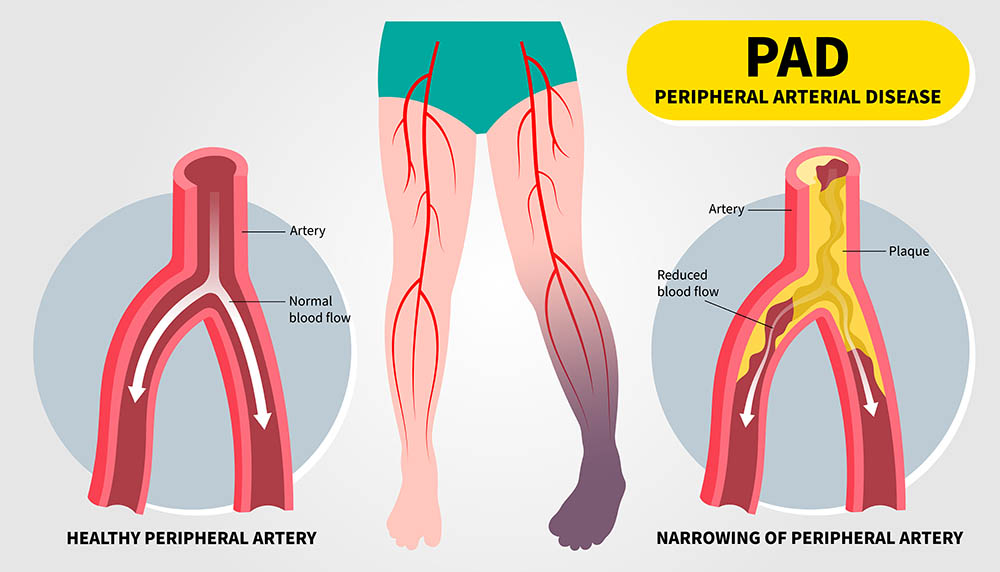
PAD is a vascular condition that happens when arteries carrying blood to your legs, pelvic area, or arms become narrowed or blocked, typically from plaque buildup. Plaque is made up of cholesterol, fats, and inflammatory materials that stick to artery walls over time.
Your arteries are like little traffic tunnels, moving blood loaded with oxygen from your heart to other parts of your body. When plaque builds up on the artery walls (this is called atherosclerosis), it narrows the tunnel and makes it harder for blood to get where it needs to go.
The majority of people with PAD develop it in their lower extremities (hips, legs, and feet). Upper-extremity PAD affects the shoulders, arms, hands, and fingers, but it is much less common and only occurs in about 10% of cases.
Lifestyle modifications, medications, and certain medical procedures are extremely successful in slowing the progression of the condition, especially when started early. The scary part of PAD is that if it’s left untreated, it can lead to pain, numbness, infections, and in severe cases, amputation. That’s why early detection matters – a lot.
Who’s at Risk for PAD?
For a condition that doesn’t get a lot of media buzz, PAD is more common than most people realize. It affects more than 200 million people around the world. Nearly half of Americans between the ages of 45 and 84 are walking around with atherosclerosis and don’t even know it!
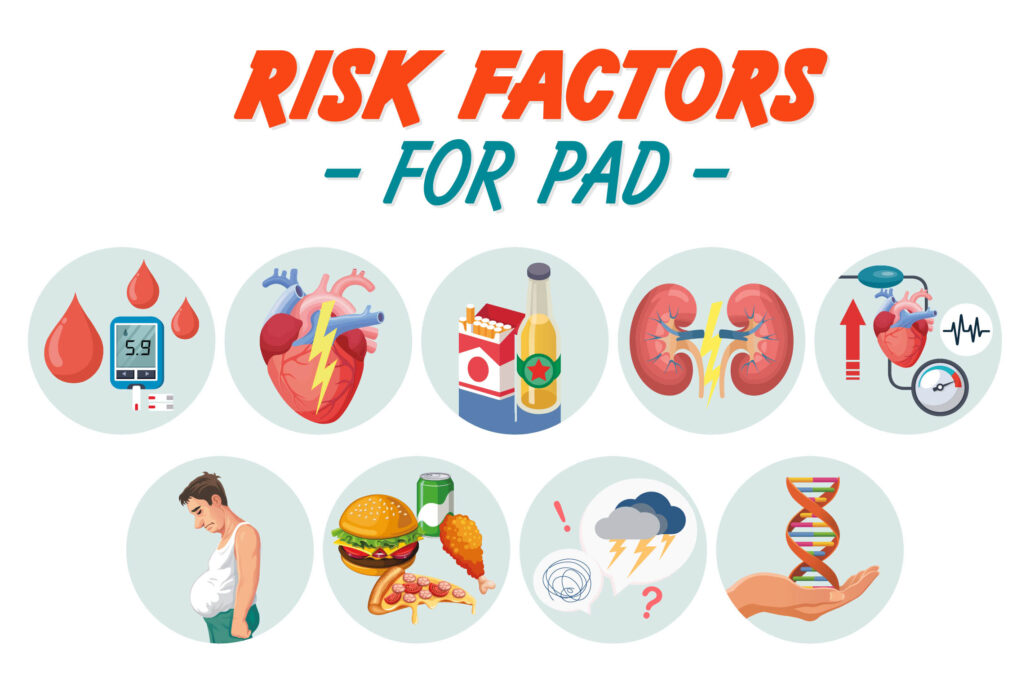
You’re at higher risk for PAD if you have:
- Diabetes
- A personal or family history of PAD, heart disease, or stroke
- A history of smoking or tobacco use (past or present)
- Chronic kidney disease
- High blood pressure and/or high cholesterol
- Obesity or low physical activity
- A diet high in saturated fats
- Chronic stress
- Certain non-modifiable factors like race (Black people are at higher risk) or age (if you’re over 65, or over 50 with risk factors for atherosclerosis)
If you have any risk factors for PAD (hello…diabetes), you should talk to your doctor about getting screened because getting ahead of PAD means getting ahead of complications.
What’s the Link between PAD and Diabetes?
PAD and diabetes often influence each other. Chronically high blood sugar from diabetes can damage blood vessels over time, causing arteries to narrow and become more prone to plaque buildup.
Diabetes often travels alongside other artery-stressing conditions like high blood pressure, high LDL (“bad”) cholesterol, high triglycerides, obesity, and kidney disease. Nerve damage (neuropathy) can also complicate things by dulling pain, which may delay recognition of early PAD symptoms.
PAD can make it harder for cuts or sores on the feet to heal, and it can also increase the risk for heart attacks and strokes. That’s why recognizing PAD early and talking with your healthcare provider about screening is so important.
Did we mention that screening is important??
Symptoms of PAD: Silent, Subtle, Then In Your Face!
Not everyone with PAD feels symptoms, especially early on. When symptoms do show up, they’re often brushed off as arthritis, aging aches and pains, or being out of shape.
The first noticeable symptom is often leg pain while you’re walking or exercising that goes away with rest, but then comes back when you start moving again.
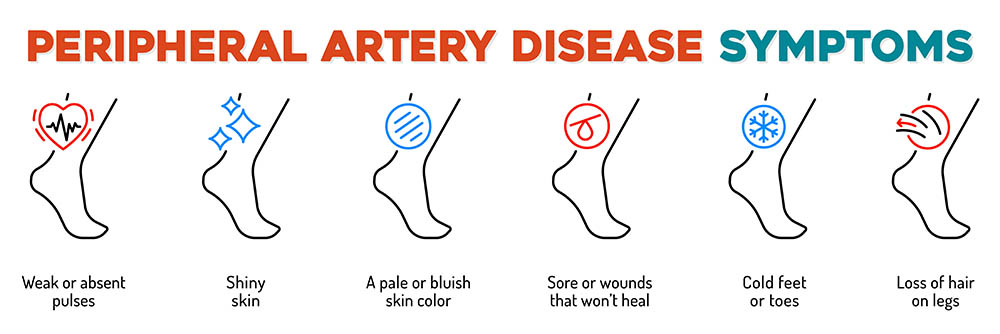
Common PAD Symptoms Include:
- Pain, cramping, or aching in the legs, hips, or buttocks with activity
- Leg numbness or weakness
- Weak or absent pulses in the feet or ankles
- Cuts or sores on the feet or toes that heal slowly (or not at all)
- Slow-growing toenails
- Hair loss or slower hair growth on the legs
- Cooler skin temperature in one leg or foot
- Skin color changes when the affected leg is elevated (skin turns white when the leg is elevated)
- Erectile dysfunction
For upper-extremity PAD, symptoms may include discomfort, pain, tightness, heaviness, or cramping in the arms or hands during use (even with simple movements like washing your hair), hair loss on the arms, swelling, and slow nail growth.
People with diabetes and PAD often develop symptoms that are more serious and progress faster than in people without diabetes, leading to slower or non-healing wounds, infections, and, in severe cases, an increased risk of limb loss.
Because nerve damage (neuropathy) can mask pain signals, many people with diabetes don’t experience classic PAD symptoms. That’s why regular foot checks and PAD screenings are so important for people with diabetes.


Our goal is to protect your personal health information. Please keep your questions general and do not post personal medical information here. If you have a specific question, please email events@tcoyd.org.
Thank you for all the valuable information you share with us! I have been Type 1 for 2.5 years, but do not know very much about what a correction factor is and how to calculate it. I live in Canada, so if you answer this question, can you please use Canadian numbers? We use smaller numbers, where the American ones are much larger. Have a nice day! Ann
Sorry that all of our numbers are in mg/dL! To determine your glucose numbers in mmol/L, you would divide the glucose that’s in mg/dL by 18. Here are two articles we’ve done that discuss correction factor, but it will probably be easiest if you find information that’s already in mmol/L, like the first link below:
https://diabeteseducatorscalgary.ca/medications/insulin/insulin-sensitivity-factor-isf.html
https://tcoyd.org/2021/05/how-do-i-know-how-much-insulin-to-take-with-each-meal/
https://tcoyd.org/2020/04/covid-19-diabetes-a-great-time-to-evaluate-your-diabetes-regimen-at-home/
Another Very interesting and important article, Dr. Edelman!!!! I appear to have several symptoms, but have been doing all the early treatments: I exercise, eat healthy, keep my cholesterol and blood pressure in check, etc. I thought my hairless legs were a ‘present’ for living so long! Should I see a doctor sooner or can I wait for my appointments in April? Should I see my gp or my endocrinologist? Thank you, Dr. Edelman and the whole TCOYD Team!!!!
I don’t think it is an urgent situation, and I think I would ask for Doppler exams looking at the blood flow in lower extremities. It is quite simple and easy to do, and I think you can ask either your GP or your endocrinologist. If you want, you could send a message to the doctor so you can get it done before April, that way you can discuss the results at your appt. In the meantime, don’t worry…you’re in good shape.