

How Does Alcohol Affect Blood Sugar?
First, a little liver biology before we dive into alcohol and diabetes.
Your liver is a major multitasker, performing over 500 vital functions. One of its main jobs is to release glucose into your bloodstream when your blood sugar starts to dip.
When you drink alcohol, your liver shifts priorities. It treats alcohol like a toxin (even when it’s disguised as a tasty skinny margarita) and works to clear it from your system as fast as possible.
While your liver is busy breaking down alcohol, glucose release gets put on the back burner temporarily. Without glucose flowing into your bloodstream like it normally does, your blood sugar can drop unexpectedly.
If you use insulin or take sulfonylureas, you’re at a higher risk for delayed hypoglycemia. This means your blood sugar can drop several hours after you drink – even overnight or into the next morning.
In fact, alcohol’s blood sugar–lowering effects can last up to 24 hours, so you may be more insulin-sensitive the day after drinking.
But what if you drink alcoholic beverages that have carbs or sugar? Don’t those raise blood sugar?
They do…at first. The carbs and sugar in an alcoholic drink can cause an initial blood sugar spike, but then the effects of the alcohol will lower blood sugar hours later.
Alcohol’s Hidden Impact on Lows, Glucagon, and Other Meds
Alcohol can interfere with how your body recognizes and treats lows, and how well certain medications work.
Here are a few important points to keep in mind:
Hypoglycemia Unawareness: When you’ve been drinking, you may not feel the usual signs of low blood sugar or hear your CGM alarms after you’ve gone to bed. This can increase your risk for severe hypoglycemia, seizure, or death (sorry to be a bummer, but it’s true). That’s why you should always sleep with someone…from the bar!
Emergency Glucagon: Emergency glucagon works by signaling the liver to release glucose into the bloodstream. When your liver is preoccupied with getting rid of alcohol, glucagon may not work as well to raise your blood sugar in an emergency.
Medication Interactions: Alcohol can interact with other medications too, so make sure you know if other meds you take are affected by alcohol. (fyi…it does not interfere with Cialis!)
The Best and Worst Booze for Blood Sugar
If you still feel like cracking open a cold one after all that (or maybe because of all that), you might be wondering…what can I drink that won’t wreck my blood sugar?
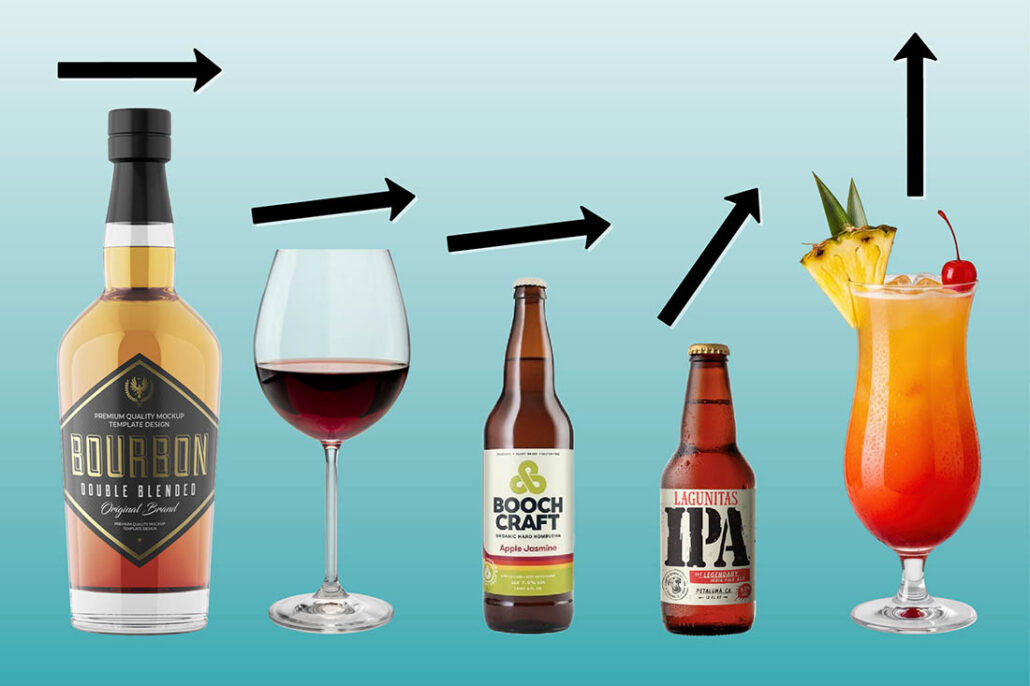
Since alcohol doesn’t typically come with nutritional info, it can be hard to know what you’re actually drinking. Thankfully you can look up most drinks online, but here’s a general ranking of best to worst based on carbs, calories, and impact on blood sugar.
The Best for Blood Sugar: Spirits
Hard liquors (whiskey, vodka, gin, tequila, etc.) typically have no carbs and about 100 calories per 1.5-ounce shot, so they generally are the best for blood sugar. You have to watch what you mix them with though – that’s where you can get into trouble.
Next In Line: Wine, Seltzers, and Kombuchas
Good news for winos…wine (dry wine) is pretty diabetes-friendly. A 5-ounce glass of dry red or white wine typically has about 120-130 calories and about 5g of carbs. Sweeter wines like port, sweet sherry, and ice wine will be higher.
Hard seltzers and kombuchas usually come in cans with labels so you know what you’re drinking. Seltzers and kombuchas often have about 100 calories and anywhere from 2-10g of carbs in a 12-ounce can.
All Over the Map: Beer
Not all beer is created equal! Light beer like Michelob Ultra has 95 calories and 2.6g of carbs. Stella Artois, which is a “middle of the road” beer, has 140 calories and 11g carbs. IPAs can range from 150-250 calories and 12-20g of carbs per 12-ounce serving (but most pints at pubs are 16 ounces).
The Worst Offenders: Fruity Cocktails
Fruity cocktails can cause mega blood sugar spikes. A pina colada or strawberry daiquiri can be anywhere from 250-500 calories and 40g of carbs, which is comparable to a Big Mac! (That being said, there’s nothing like a double cheeseburger and a mai tai on the sands of a Hawaiian resort!)
Alcohol and Insulin: When to Bolus
Since alcohol may make your blood sugars come down eventually, you’ll likely need to be more conservative with insulin. The worst thing you can do after you come home from a night of drinking is bolus for a high blood sugar and then go straight to sleep.
Generally speaking, if you’re drinking hard liquor, wine, kombucha, or seltzer, you don’t need to bolus. If you’re drinking regular beer (not the light or low carb stuff) or fruity cocktails you should bolus, but be conservative. Try bolusing about half as much as you normally would for the carbs in your drink. Allow your blood sugars to be a little on the high side so you can be on the safe side.
There are so many variables that can affect your blood sugar, the key is to wear a CGM and make sure your high and low alerts are set appropriately.
Tips for Drinking with Diabetes…Practice Makes Perfect!
If you’re only going to have one or two drinks you don’t necessarily need to follow all these tips, but they’re still good to keep in mind.
Prep Before You Pour: Your Alcohol and Diabetes Game Plan
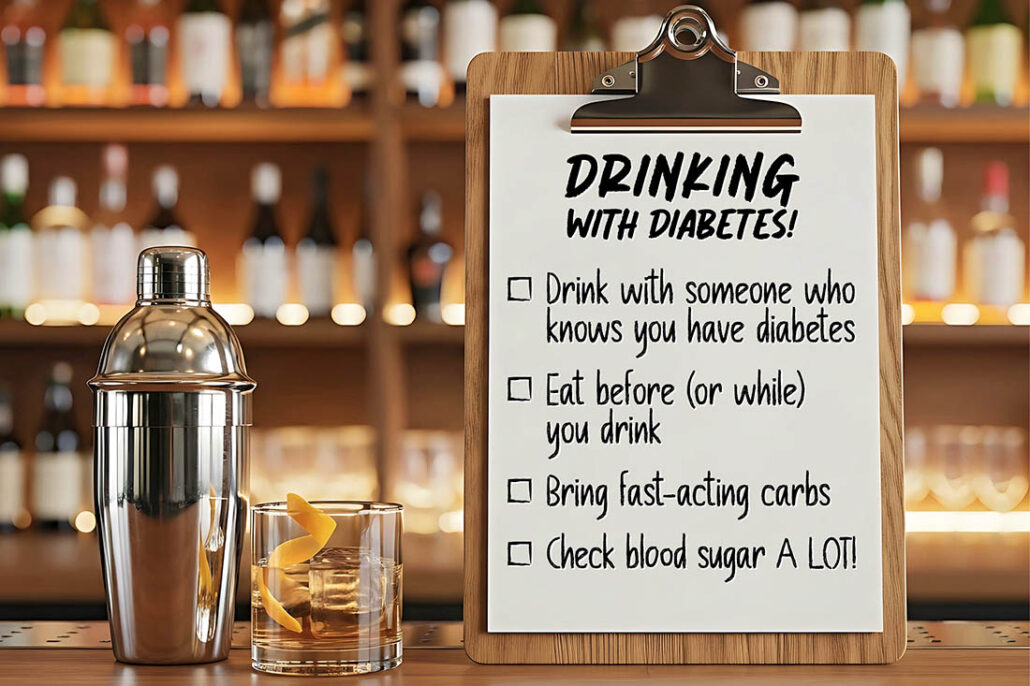
The Short List of Top Tips:
- Go out with someone who knows you have diabetes.
- Wear your CGM (or bring your glucometer) and check your blood sugar often.
- Consider targeting 150-200 mg/dL for the night – you can put your hybrid closed-loop system in exercise mode or take less of your basal if you’re on MDI.
- If your blood sugar isn’t elevated, eat something with slow-acting carbs before or while you’re drinking.
- Bring fast-acting carbs with you, and understand you may go low overnight if you’re on insulin or sulfonylureas.
The Full Breakdown:
- Use a CGM and make sure your low and high alerts are set appropriately (high alert at 180 mg/dL, low alert no lower than 80 mg/dL for most people).
- Share your CGM data with a friend for the night (even if it’s a one-night stand!)
- Do your diabetes “tasks” before you go out (change your sensor or pump site if you need to, etc).
- Have a drinking buddy who knows you have diabetes, and knows what to do if you have a low.
- Bring fast-acting sugar with you, especially if you’re going to stay somewhere else overnight.
- Targeting 150-200 mg/dL for the night is fine when you’re trying to avoid hypoglycemia. It’s okay to let yourself run a little high to avoid dangerous lows.
- If you’re on multiple daily injections, consider taking your evening basal insulin before you go out so you don’t forget later. You might even reduce your basal by 20% for the night to avoid an overnight low.
- If you use a hybrid closed-loop system, consider putting it in exercise mode 1-2 hours before you start drinking to target a slightly higher blood sugar. Don’t forget to take your pump off exercise mode the next day.
- Eat something before you start drinking (or while you’re drinking) so you aren’t drinking on an empty stomach. Eating something with protein and fat can help slow digestion and avoid a sharp spike. (God invented pizza to go with beer for a reason!)
- Be mindful of the type of alcohol you’re drinking, and avoid sugary mixed drinks if you can.
- Check your blood sugar a lot – before you start drinking, while you’re drinking, and before you go to bed. You may even want to set an alarm to check your blood sugars a few hours after you go to sleep to catch any delayed hypos.
- Do NOT drink and drive!
Make sure your friends and family know that alcohol can cause low blood sugar, and tell them what the signs look like. Hypoglycemia can easily be mistaken for being drunk (slurred speech, poor coordination, and confusion), so people may not realize you’re having a low. Tell your friends to encourage you to check your blood sugar if this happens, and to call 911 if they’re concerned.

Our goal is to protect your personal health information. Please keep your questions general and do not post personal medical information here. If you have a specific question, please email events@tcoyd.org.
What does bolus mean?
Bolus is when you give insulin for a meal or when you want to bring down a high blood sugar. Basal is the background insulin (the long-acting type for people who use multiple daily injections or the background insulin that is given throughout the day when someone is using an insulin pump).