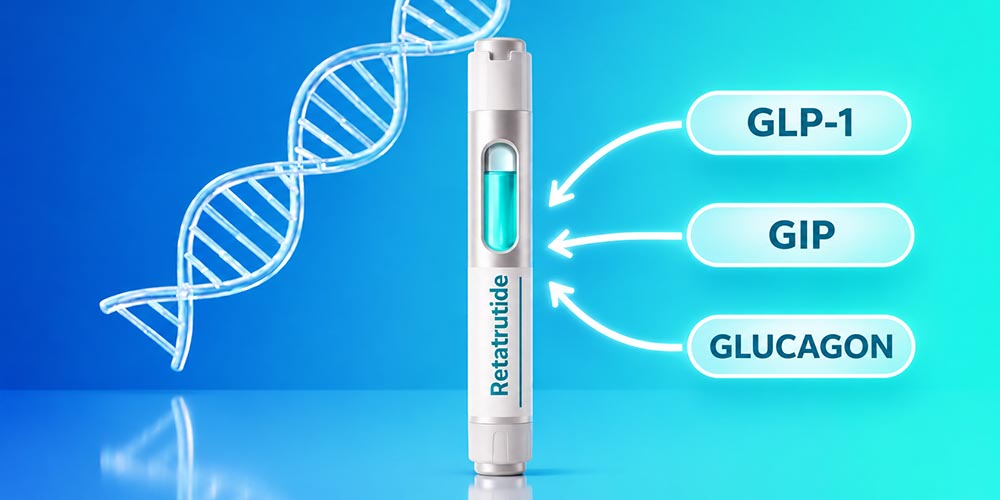
A generic quick pen injector pen for retatrutide with the names GLP-1, GIP, and glucagon off to one side
Article Highlights
  • Retatrutide is the first-ever triple agonist medication, which means it targets three hormone receptors instead of one or two, like Ozempic or Mounjaro.
  • Clinical trials have shown substantial weight loss with retatrutide, along with significant improvements in A1c in people with type 2 diabetes.
  • Retatrutide is also being studied for other conditions including chronic kidney disease, knee osteoarthritis pain, moderate-to-severe obstructive sleep apnea, chronic low back pain, cardiovascular health, and liver disease.
  • Retatrutide is not FDA-approved yet, so beware of knock-off products being sold on the black market!

Reading Time: 4 minutes

Just when we’ve finally figured out how to pronounce semaglutide and tirzepatide (the main ingredients in Ozempic and Mounjaro, respectively), here comes another pharmaceutical mouthful: retatrutide (reh-tuh-TROO-tide).

You don’t have to be able to pronounce it, but retatrutide is an important one to know. It’s a once-weekly injectable medication that’s generating a lot of buzz because of the unprecedented weight loss and impressive A1c reductions seen in clinical trials.

Retatrutide is an investigational medication and has not yet been submitted to the FDA for approval, but all eyes are on it because it has the potential to knock Ozempic and Mounjaro from their GLP-1 thrones (or at least make them scooch over to make room).

What Is Retatrutide?
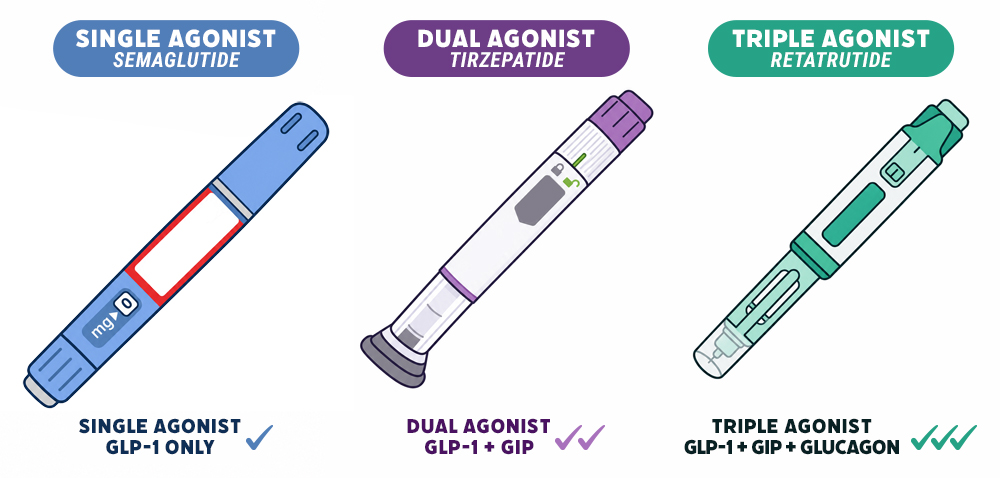
Three generic quick pen injector pens, including a single agonist GLP-1, a dual agonist GLP-1 and GIP, and a triple agonist GLP-1, GIP, and glucagon

Retatrutide is the first-ever triple agonist, which means it acts on three hormone receptors in your body simultaneously instead of one or two. 

Here’s a simple overview of how retatrutide is different from other GLP-1s:

  • Semaglutide (Ozempic/Wegovy): Activates GLP-1 receptors
  • Tirzepatide (Mounjaro/Zepbound): Activates GLP-1 and GIP receptors
  • Retatrutide: Activates GLP-1, GIP, and glucagon receptors

GLP-1 and GIP hormones help regulate appetite, insulin secretion, and blood sugar. Glucagon is best known for treating a severe hypoglycemic reaction, but it does not raise glucose levels when given in this combination. Glucagon also plays important roles in energy expenditure (calorie burning) and fat metabolism.

By activating all three pathways, retatrutide may help you eat less while also influencing how your body uses energy. This is the key difference.

And despite what you may have seen on TikTok, retatrutide is not called a “GLP-3.” There’s no such hormone. Nice try, internet!

Retatrutide for Weight Loss: How Much Weight Are People Losing?

CLINICAL TRIAL WEIGHT LOSS WITH RETATRUTIDE
TRIUMPH-1: Adults with obesity without diabetes
~25%
TRIUMPH-2: Adults with obesity and T2D
~19%
TRANSCEND-T2D-1: Adults with T2D
~16.8%

Results from retatrutide clinical trials have been significant. In the phase 3 TRIUMPH-1 trial, more than 2,300 adults with obesity who did not have diabetes were studied over 80 weeks (about 18 months).

At the highest dose of retatrutide, participants lost an average of about 25% of their starting body weight. So if you weighed 200 pounds, the average weight loss would have been about 50 pounds!

Interestingly, when any of these new weight loss drugs are studied, the weight loss is always lower in people with diabetes compared to those without diabetes.

Retatrutide for Diabetes: How Does It Affect A1c?

CLINICAL TRIAL WEIGHT LOSS WITH RETATRUTIDE
TRANSCEND-T2D-1: Adults with T2D
Up to 2%

In the phase 3 TRIUMPH-2 trial, people with type 2 diabetes lost approximately 19% of their body weight at the highest dose of retatrutide over an 80-week time period, and Retatrutide significantly improved blood sugar control. 

In the TRANSCEND-T2D-1 study, A1c decreased by nearly two percentage points at the higher doses. For someone starting with an A1c of 9%, that could mean getting down close to 7%, which is the general goal to help most people avoid diabetes complications.

Additional Retatrutide Studies

Thanks to the approvals of other GLP-1 indications beyond weight loss and A1c, Lilly is studying retatrutide in Phase 3 clinical trials for the following conditions:

  • Knee osteoarthritis pain
  • Moderate-to-severe obstructive sleep apnea
  • Chronic low back pain
  • Cardiovascular and renal outcomes
  • Metabolic dysfunction-associated steatotic liver disease (MASLD)

Can People with Type 1 Diabetes Take Retatrutide?

If you’re living with type 1 diabetes, you may be thinking, “Another exciting new diabetes medication, and we’re left out AGAIN?!” 

We hear you. Unfortunately, retatrutide studies have not yet adequately looked at people with type 1 diabetes, so we don’t know how safe or effective it would be. We do know that medications that dramatically reduce appetite and insulin requirements can create additional challenges for people with T1D, including hypoglycemia and potentially dangerous ketone production if insulin is reduced too aggressively. 

Some people with type 1 diabetes who have overweight or obesity do use GLP-1s for weight loss, but that would be a discussion you’d need to have with your healthcare team. However, if you are reading this article, there is no question you will know more than them! Get out your camera when you mention “retatrutide” for a great “deer-in-the-headlights” photo op! 

But There Is Good News for GLP-1s in Type 1!

Tirzepatide (Mounjaro/Zepbound) is currently being studied in people with type 1 diabetes. Early studies have shown significant weight loss and reductions in insulin requirements. 

It’s not FDA-approved for type 1 diabetes yet, but at least we’re finally getting the research we deserve, and a GLP-1 for type 1 diabetes might actually materialize if it’s proven safe and effective for this group. 

Retatrutide Side Effects and Safety

If you’ve taken a GLP-1 medication before, the common side effects of retatrutide may sound familiar:

  • Nausea
  • Vomiting
  • Diarrhea
  • Constipation
  • Feeling full very quickly (SATIETY)

These symptoms tend to be more common when starting treatment or increasing the dose.

Maintaining muscle mass is important when taking GLP-1medications. Adequate protein intake and resistance exercise are important when losing substantial amounts of weight.

If you’re taking insulin or a sulfonylurea, adding a glucose-lowering medication like retatrutide may mean your other medication doses need to be adjusted to prevent hypoglycemia or DKA. 

Never make medication adjustments on your own – always work with your diabetes healthcare team.

“Retatrutide” on the Black Market…Don’t Buy It!

A shady looking man with a black coat open on one side is selling drugs to a middle-aged man in a back alley with graffiti everywhere

Because of all  the positive press surrounding retatrutide, advertisements have been popping up promoting products labeled “retatrutide,” “reta,” or “research peptides.”

Please don’t buy them! Retatrutide is not yet FDA-approved, and these products sold online are not the regulated medication being studied in clinical trials. You may have no reliable way of knowing what’s actually in the vial, whether the dose is accurate, or whether the product is sterile.

We understand the temptation…diabetes medications can be expensive, insurance can be a headache, and nobody likes waiting. But when it comes to injecting something into your body, this is NOT the time to bargain hunt.

Trust us when we say that it will be worth waiting for the real thing. Please do not get your medications from the black market. It’s one thing to buy a “Calvin Klone” purse out of the trunk of a car, but you don’t want to take chances with medications that have not been approved by the FDA!

Retatrutide: Frequently Asked Questions

⏱️ How long does it take retatrutide to work?
Most people start noticing the effects of GLP-1s within the first week of treatment. This can include feeling fuller sooner and/or staying full longer. When it comes to weight loss, however, everyone is different. It’s important to understand that these medications are not quick fixes – they’re designed to support weight loss over the long term. Please do not ask your doctor for a prescription just so you can lose 10 lbs before your son’s bar mitzvah next month!

🆚 Retatrutide vs Ozempic…which is better
According to results from the TRANSCEND-T2D-2 trial, which compared retatrutide (9 mg and 12 mg) with injectable Ozempic (2 mg) in adults with type 2 diabetes, retatrutide delivered greater A1c reduction and more weight loss than Ozempic at 80 weeks. Retatrutide lowered A1c by an average of 2.2% vs. 1.8% with Ozempic, and those taking retatrutide lost an average of 44 lbs to 47 lbs compared to 21 lbs with Ozempic. However, people respond to each medication differently, and not everyone will need to take the highest dose of a medication to reach their weight loss goals.

🧐 If I’m already on Ozempic or Mounjaro, can I switch to retatrutide when it comes out?
Some people may not achieve their desired results on Ozempic or Mounjaro, and they may respond better to a medication like retatrutide. If your insurance covers retatrutide, there’s no reason why you could not switch, but you will need to work closely with your healthcare team on the transition. If you’re doing well on Ozempic or Mounjaro, there may be no need to switch.

💉 Can retatrutide improve insulin resistance? 
In a phase 2a study involving people with obesity and metabolic dysfunction-associated steatotic liver disease, retatrutide significantly improved several markers of insulin resistance. By activating the GLP-1 and GIP receptors, retatrutide can improve insulin secretion and blood sugar regulation. The glucagon receptor may also influence how your body uses stored fat. As excess body fat decreases – particularly around the abdomen and liver – your body may become more responsive to insulin.

📆 When will retatrutide be available?
It may be a year or more before retatrutide hits the pharmacy shelves. Lilly plans to submit the medication to the FDA in early 2027, and the review process can easily take several months. Our best guess is that retatrutide will become available in late 2027 or early 2028 (assuming it gets approved).

Retatrutide: Key Takeaways

Retatrutide is raising the bar for what’s possible with the next generation of diabetes and weight-management medications. We’re moving beyond treatments that target one or two hormones to medications that combine multiple hormone pathways that work together in complementary ways.

By targeting three hormone receptors, retatrutide is showing how powerful this approach can be. The weight-loss results have been remarkable, improvements in blood sugar have been impressive, and ongoing research is exploring potential benefits in treating other conditions and improving overall metabolic health.

Believe it or not, researchers are already looking into what quadruple and quintuple receptor agonists can do, so this next generation of medications will be one to watch!

Explore our resource library and video vault, and subscribe to our monthly digital newsletter for more tips, tools, and expert guidance on how to take control of your diabetes.

1 Comment
  1. Our goal is to protect your personal health information. Please keep your questions general and do not post personal medical information here. If you have a specific question, please email events@tcoyd.org.

Leave a Reply