

Why We Still Treat Type 2 Diabetes Like It’s 1995

Doctors have been treating diabetes the same way for decades. It usually goes something like this:
- Start with diet, exercise, and metformin
- Increase the metformin dose and/or add another medication like an SGLT2 inhibitor (Jardiance, Farxiga, Invokana), DPP-4 inhibitor (Januvia, Tradjenta), or sulfonylurea (Glucotrol, Glipizide)
- Try a third medication
- Add a GLP-1 or start insulin
This step-by-step process can take years, leaving blood sugar levels elevated and allowing complications to quietly develop. It’s a totally outdated strategy given the more effective options we have today. It’s the medical equivalent of renting DVDs from Blockbuster when you could be streaming them instead!
Type 2 Diabetes Is Naturally Progressive
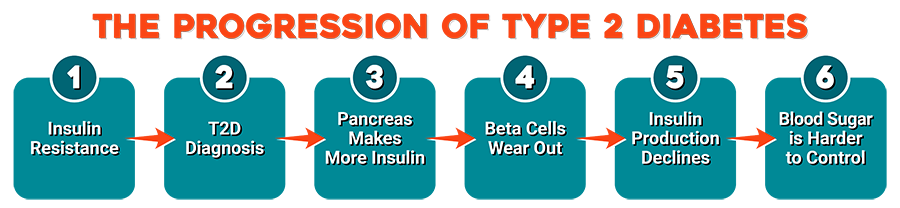
One of the most important things to understand about type 2 diabetes is that it’s a progressive condition, which means it can worsen over time, even if you’re doing everything “right”.
When you’re newly diagnosed, your pancreas still produces insulin, but it either isn’t making enough or you aren’t responding to it well. This is called insulin resistance. In an effort to keep blood sugar in a healthy range, your pancreas tries to pump out more insulin.
Over time, that extra workload takes a toll. The insulin-producing beta cells begin to wear out, and insulin production declines. This makes blood sugar levels harder to control, and many people need more medications to keep their blood sugars in their target range.
Diabetes Complications Don’t Happen Overnight
Complications from diabetes don’t just suddenly appear out of nowhere. They’re due to chronically elevated blood sugar levels that damage blood vessels and nerves over the course of years.
These complications are asymptomatic in the early stages (meaning you don’t have symptoms), so they’re harder to detect, and healthcare providers often miss them. But damage is occurring!
One of the most powerful ways to reduce the risk of complications is to keep blood sugar levels in a healthy range, which is why early, effective treatment is so important!
Starting a GLP-1 medication earlier in type 2 diabetes could help people reach healthy glucose levels sooner, and potentially protect against long-term complications.
What Are GLP-1 Medications?
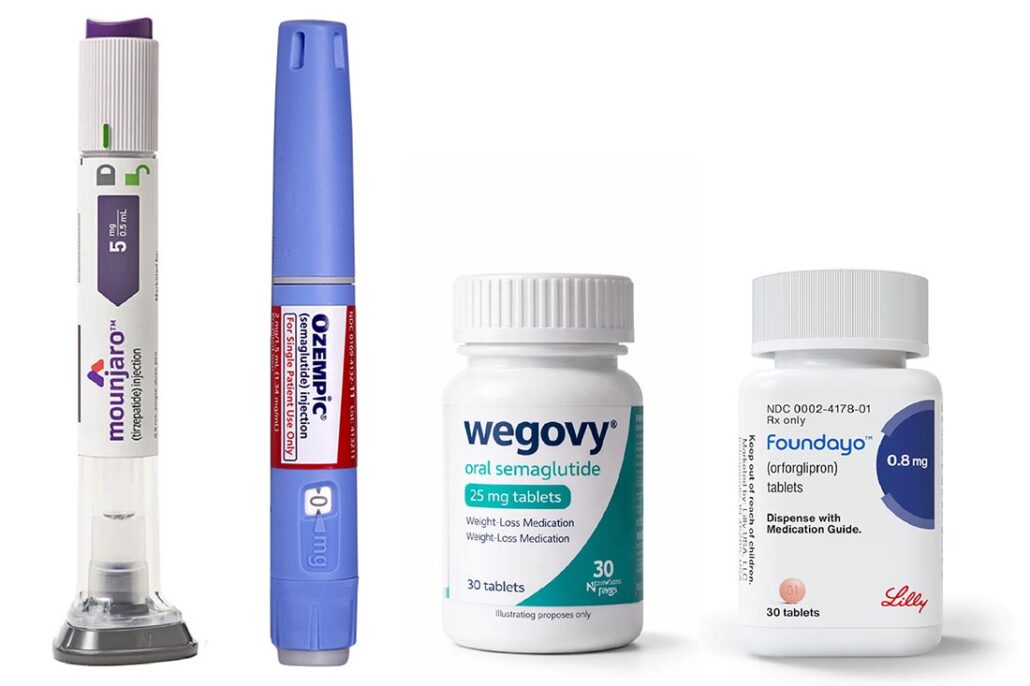
GLP-1 medications mimic a natural hormone in the body called glucagon-like peptide-1. Your gut naturally releases GLP-1 after you eat. GLP-1 medications work by stimulating insulin secretion, reducing glucagon production (glucagon is a hormone that raises your blood sugar levels), and slowing stomach motility to help regulate blood sugar levels. GLP-1s also communicate with your brain to make you feel less hungry and help you to feel fuller faster.
Many GLP-1 options have dual indications, meaning the exact same medication is marketed under different brand names depending on whether it’s indicated for type 2 diabetes or weight management.
Here are a few of the most common GLP-1 options and GLP-1 indications:
Tirzepatide (GLP-1/GIP dual agonist)
- Mounjaro (type 2 diabetes)
- Zepbound (weight loss)
Orforglipron
- Foundayo (weight loss)
Semaglutide
- Ozempic & Rybelsus (type 2 diabetes)
- Wegovy & Wegovy Pill (weight loss)
Dulaglutide
- Trulicity (type 2 diabetes)
Liraglutide
- Victoza (type 2 diabetes)
- Saxenda (weight loss)
The Benefits of GLP-1s
GLP-1 medications don’t just lower blood sugar and support weight loss; they work across the entire metabolic system.
They can help with:
- Heart Health: Lowering the risk of heart attack and stroke
- Kidney Protection: Slowing the progression of kidney disease
- Liver Health: Improving fatty liver disease
- Sleep Apnea: Improving sleep
- Blood Pressure: Supporting modest reductions in blood pressure
- Cholesterol: Lowering LDL and triglycerides
- Inflammation: Reducing systemic inflammation and osteoarthritis of the knee
So…Why Aren’t We Starting Them Sooner?
Current guidelines tend to prioritize starting a GLP-1 medication for people who already have cardiovascular or kidney disease, or for those where weight management is a concern.
But many people with type 2 diabetes have underlying risk factors, even if they haven’t had a heart attack or developed kidney disease. This is exactly what we’re trying to prevent!
That said, there are real-world barriers. Newer medications are more costly, and healthcare providers can take a long time to change their practice habits. Also, it can take years to complete studies that show additional benefits in other organs like the heart, kidneys, liver, etc.
All of this slows down adoption.
Shifting toward earlier use of GLP-1s starts with rethinking them as a proactive way to protect long-term health. Insurance providers need to get with the program too – getting people healthier earlier can save them money in the long run.
The Next Wave of GLP-1 Options: Bigger, Better, and More Powerful
A new generation of GLP-1 therapies is on the horizon, and they may be even more effective for both blood sugar and weight management.
Here’s what’s coming soon, and what’s in clinical trials:
- Orforglipron (brand name Foundayo): A once-daily oral GLP-1 was just approved by the FDA for weight loss, and will hopefully be approved for type 2 diabetes soon.
- CagriSema: A once-weekly injection that combines semaglutide with cagrilintide – another hormone that helps regulate appetite. It’s being studied for both diabetes and weight management, with an FDA decision expected in late 2026.
- Retatrutide: A “triple-agonist” (GLP-1/GIP/glucagon) that targets multiple metabolic pathways and has shown impressive weight loss results in studies.

Our goal is to protect your personal health information. Please keep your questions general and do not post personal medical information here. If you have a specific question, please email events@tcoyd.org.
I tried a dose of my wife’s Ozempic to see what it would do for my blood sugars and I was able to reduce my insulin by a 1/3. Only problem was I also wasn’t hungry and lost 5 lbs. I am not overweight so can’t afford to loss. Is one or the other drugs better with type 2 control with out the weight loss?
Ozempic is not as potent in terms of weight loss compared to Mounjaro, however, Ozempic may be a good choice for you because you can titrate the doses fairly low to get your desired effect without weight loss. However, it’s very important that you work with your own healthcare provider and follow their recommendations for YOU.
I was fortunate to get on Ozempic four years ago, as soon as my a1c tipped over from prediabetes to diabetes (6.5). I’m wondering if those of us on these great medications should expect our diabetes to eventually progress and require additional medications. Do we have enough data yet?
That’s a very good question! Because there’s a lot of heterogeneity in the type 2 diabetes community, it’s hard to say for certain for everyone. However, there’s good data to show that GLP-1s can prevent the progression of type 2 diabetes – even revert it back to normal in some individuals – but it all depends on how long you’ve had type 2 as well as your genetic makeup.
I have seen recommendations to lower A1c first with insulin if over 10% and only add a GLP after A1c is lower. Do you have any thoughts on this?
Yes! My thought is that’s the craziest thing I’ve ever heard!
What about eye issues?
In a very large cardiovascular outcome trial, it did show an imbalance of people whose retinopathy got worse. But in every single analysis since then, they did not see any issues with diabetic retinopathy. So, if I were you, just to be safe, you can get your eyes checked and make sure they’re stable before you start it.
I have Gastroparesis. I tried Ozempic and was a Zombie with flu-like symptoms, chest pain and constipation for 2. months. After a year I am trying Mounjaro. After just two shots, same symptoms. My gastroenterologist does not think I should continue. Your thoughts?
It sounds like you are having issues with any GLP-1, with the normal titration. If you really want to try it again, I would suggest trying Victoza, which comes in a pen, and allows you to titrate the dose super slowly…about five to 10 times slower. And although it’s not as potent, you still will get a lot of benefits as time goes on. I do believe the slow titration may help you, but obviously speak to your own provider about what would be best for you.
I’ve had type 2 diabetes since I turned 65, i’m 77. I started Mounjaro in March 2025.. I have diabetic neuropathy in my feet. I have diabetic retinopathy with. macular degeneration. all of this is monitored and I was able to have my caregivers write up. an explanation why I needed a CGM. I’ve been using a Libby‘s freestyle 2 & 3 for 8/9 weeks. With than being said, I’m able to monitor my fasting glucose and watch what and how I eat. Which is awesome!
Two things about Mounjaro The first is weight loss, which was great started out last March at 270 lbs. I’m now 190 lbs. and some loss of muscle mass. The other is constipation. I’m downing 80 to 90 ounces a day and only have a void every other day.. There’s two things that I specifically do every day to monitor is to write down my fasting glucose level every morning when I wake up, I’ve been doing that since I started Mounjaro, and I do intermittent fasting 16:8, every day and every 2 weeks I’ll stretch it 18 /20.for a day.
I login every day to my Google Calendar and enter facts that I think are relevant to my diabetes or a change in medication so if you want more info, I’d be glad to send it to you upon request to my email address.
Also, my medication‘s and supplements list And my blood work is available.
Hi there,
Did you have a question for Dr. Edelman, or are you simply sharing how GLP-1s have been beneficial for you? Appreciate your comment!
Sounds great if constantly being sick and no energy didn’t go with it.
I have tried all under the sun including the sun and allergic to every last one so the only alternative is natural approach and strict diet control thanks but I’m doing fine without more energy also can move with out crashing out all day
Everyone has to do what works best for them…glad you are doing fine!